
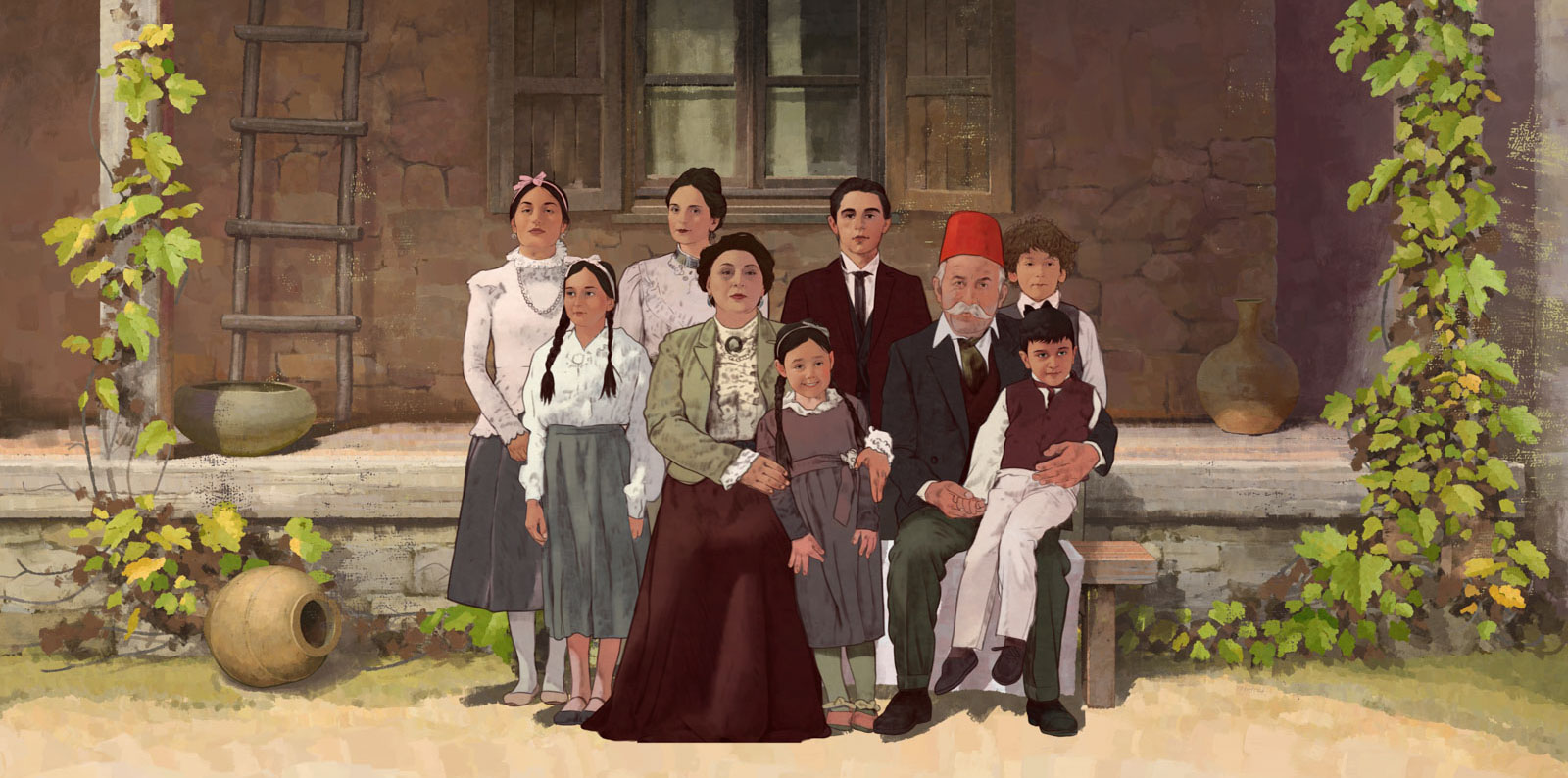
Documentary Aurora’s Sunrise pulls back the curtain on two horrific chapters in the life of Armenian genocide survivor Aurora Mardiganian. In 1915, during WWI, the Ottoman Empire undertook a program to eliminate the Armenians from Turkey out of fear that the Armenians would rebel and declare independence. Until this inflection point in history, the Islamic Ottoman Empire had tolerated the Christian Armenians, carving out a place for them in Turkish society that worked symbiotically to benefit both cultures. The war provided an opportunity to move against the Armenians, and Turkey still denied the genocide that resulted. Still, around a million Armenians died in death marches, concentration camps, and outright mass executions. Many that survived were forced into sexual slavery or forced to convert to Islam and sent to work in Muslim homes as slaves.
“…She was then sold into a Turkish harem…”
After Ottoman Turks killed her father, Mardiganian’s family was forced to the death marches in the Syrian desert, where many of her relatives died. She was then sold into a Turkish harem but eventually escaped to St.Petersburg, Russia, and later to New York. There, her story caught the attention of a screenwriter, Harvey Gates, who ghost-wrote a memoir of her odyssey, Ravished Armenia. The book was introduced in society circles and became a success. Ravished Armenia was adapted as a script filmed in 1919, with Mardiganian playing herself, and first screened in London as the Auction of Souls.
This marks the beginning of the second exploitation and mishandling of Mardiganian and other Armenians in the U.S. The film producers made much of the film’s potential to raise awareness of the genocide (which it did), but, as usual, the real motivation was profit. To that end, many Armenians who had barely survived to make it to sanctuary in the U.S. were cast in the film and asked to re-live the horrors of the genocide, including the crucifixions of young women depicted in the film and portrayed by actual survivors. On top of this outrage, Mardiganian was pressed to travel with the film and give talks to ghoulish audiences hanging on the morbid details of the experience. In this fashion, Mardiganian became something of a silent film star, though she says that she was not acting but rather recounting the story of her journey. As a young woman unfamiliar with American life, it was easy for the Gates family to exploit her, and her life was controlled. She worked endless hours, and promised fees were withheld from her.
Publisher: Source link