
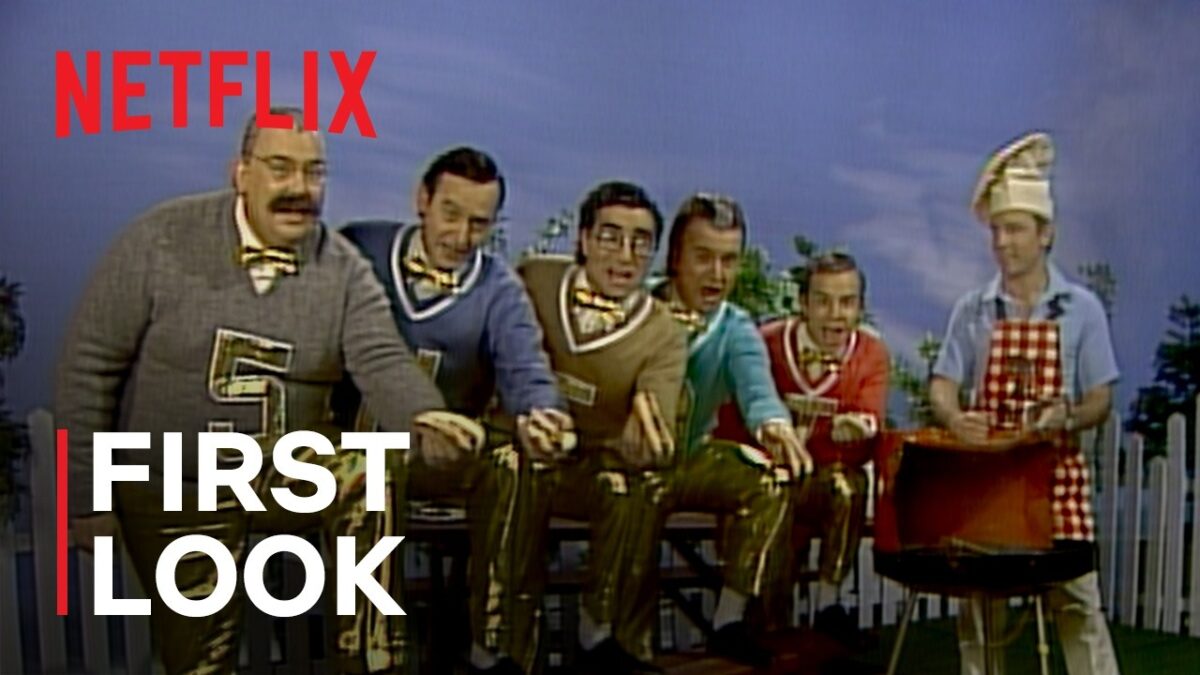
There’s a particular kind of joyful thrill that comes from remembering the first time something completely blew your mind—a type of déjà-new, a dopamine rush of nostalgia that almost reawakens the original experience. This re-exhilarated sensation of discovery is so potent and carries such a unique euphoria that there probably should be a hyper-specific Japanese word for it. And that feeling courses through Jason Hehir’s terrific Netflix documentary, “SCTV: The Greatest Show You’ve Never Heard Of.”
READ MORE: ‘SCTV’: Every Episode Of The Classic Cult Comedy Series Is Finally Coming To Netflix September 1
About the scruffy, absurdist, ragtag group of eccentric Canadian comedians that comprised “SCTV”—John Candy, Eugene Levy, Catherine O’Hara, Martin Short, Rick Moranis, Andrea Martin, Dave Thomas, Joe Flaherty, and Harold Ramis, among others—“The Greatest Show You’ve Never Heard Of” is a wonderfully funny, resonant, and heartfelt celebration of comic genius.
For the uninitiated, “SCTV,” short for “Second City Television,” was a trailblazing Canadian sketch comedy series that ran from 1976 to 1984. Think of it as the weirder Canadian cousin of “Saturday Night Live,” or, as Kathryn Hahn puts it in the doc, “their cooler, older cousin, out smoking cigarettes in the back.” Born out of Toronto’s Second City comedy troupe—Dan Aykroyd, Gilda Radner, and John Belushi were among those in its orbit—it was irreverent, unpredictable, and gleefully off-kilter. While “SNL” became an American institution, “SCTV” remained a cult secret whose influence far exceeded its popularity.
Every “SCTV” anecdote from an admirer, be it Hahn, Tom Hanks, Conan O’Brien, Bob Odenkirk, Bill Hader, or Fred Armisen, practically quivers with the delight of rediscovering something so joyously inventive and radical decades later. Odenkirk remembers its “fringy, dangerous, crazy, indulgent quality,” while O’Brien jokes that if someone tells him they watched “SCTV” and didn’t get it, he doesn’t particularly want to know them; life’s too short. There’s something protective about that affection too; as if appreciating the show meant admission to a secret club.
As Moranis recalls, there was no hype, promotion, marketing, or advertising. “People discovered us.” And those who did became lifelong converts.
Directed by the filmmaker behind “The Last Dance,” Hehir traces the show’s early years, its precarious existence, and eventual dissolution in 1984. But his real achievement is allowing the comedians to tell their own story, combining new interviews, a July 2025 Toronto reunion, terrific archival footage, and clips that remain uproariously funny.
What made “SCTV” so extraordinary wasn’t simply the talent involved, but its gloriously bizarre central conceit. Rather than a collection of unrelated sketches, its conceptual comedy imagined an entire low-budget cable-access television station in the fictional town of Melonville, Ontario, complete with terrible programming, narcissistic performers, cheap executives, and backstage conflicts. The station was a world unto itself, with characters appearing both on air and behind the scenes, their professional rivalries and personal absurdities spilling from one into the other—a parody of television programming and an ongoing satire of the people running it.

The premise allowed almost unlimited comic possibilities, including the brilliant mash-up spoofs they pioneered. Sure, Short impersonating a hyper-caffeinated Jerry Lewis was hysterical, but next-level funny was smashing him incongruously into an Ingmar Bergman movie to create “Scenes From An Idiot’s Marriage.” And while “Woody Allen’s Taxi Driver”—Moranis giving anxiety to sociopathy—isn’t featured in the doc, it hints at the 5D comedic chess ideas they were exploding into existence. These weren’t simply impressions or movie lampoons, but elaborate ideas operating on several levels simultaneously, decades before such referential, absurdist comedy became commonplace.
And the characters were extraordinary and extraordinarily three-dimensional. Flaherty’s wheelchair-abusing, penny-pinching station president Guy Caballero, Candy’s vainglorious Johnny LaRue, Andrea Martin’s loud, leopard-print-clad station manager Edith Prickley, and Levy’s spectacularly untalented—but supremely confident—comedian Bobby Bittman were just a few of the indelible creations. From O’Hara’s flamboyant entertainer Lola Heatherton and Levy’s hilariously inept television broadcaster Earl Camembert to Short’s manic Ed Grimley, pure comic virtuosity surged through seemingly everything they did.
Hehir also finds dramatic tension in the show’s troubled history. “SCTV” perpetually struggled to survive, bouncing between networks, cities, and formats. “Saturday Night Live” poached performers, financial troubles threatened production, and success brought its own complications.
One revealing stretch concerns the unexpected popularity of Bob and Doug McKenzie, the beer-swilling Canadian hosers played by Thomas and Moranis. Conceived as a defiant “fuck you” response to Canadian-content requirements, the characters became an accidental sensation, creating opportunities and tensions that helped pull the ensemble apart. With a mea culpa tone, Thomas is candid about mishandling his newfound success and the friction it caused with his colleagues.
NBC’s involvement brought greater exposure but also network interference, an uncomfortable adjustment for comedians accustomed to doing whatever they wanted. Yet despite the departures and bruised egos, the show kept producing inspired comedy. Short’s arrival near the end of season four in 1982 brought fresh energy—and a familiar face from their extended Second City family—just as Moranis and Thomas departed for greener pastures, aka the iconic “Strange Brew” movie.
READ MORE: 88 Must-See Movies This Fall: ‘Dune: Part Three,’ ‘Digger,’ ‘Avengers: Doomsday,’ ‘The Adventures Of Cliff Booth’ & More
In many ways, “SCTV” foretold the struggles that ahead-of-their-time cult comedies like “Mr. Show” and “Arrested Development” would face decades later: critically adored, hugely influential, perpetually struggling for an audience, and unable to translate acclaim into the mainstream success they deserved.

But beyond this history, what makes Hehir’s documentary truly special is its emotional dimension.
The film brings the surviving cast members together for an emotional reunion, where they sit and watch clips of their younger selves, laughing, teasing one another, and reminiscing about a time when they were all friends trying to make each other laugh. They’re visibly older now, of course, and there’s something incredibly touching about seeing these beloved comedians reunited with the people who knew them before Hollywood came calling.
The affection is unmistakable. These are people who shared their formative years, built careers together, shared intimate family moments, occasionally drove one another crazy, and remained close through decades of marriages, children, successes, failures, and loss. Watching their young, impossibly energetic selves on screen while their older counterparts reminisce is both delightful and profoundly bittersweet.
That feeling is especially pronounced whenever O’Hara appears. She died in January 2026, just six months after these interviews were filmed, and her presence adds an almost unbearable poignancy to the reunion. She’s funny, warm, and still clearly delighted by her old friends. There’s already sadness in the absence of Candy, who died tragically young, and Flaherty and Ramis, who are also gone. Seeing O’Hara laughing alongside Levy, Short, Thomas, and Martin becomes an unexpectedly precious reminder that life, like laughter, is fleeting—brief, incandescent moments of joy that eventually end.
There’s a quieter melancholy, too, in recognizing that not everyone received the career they deserved, and some waited decades for their due. Candy became a movie star, while O’Hara, Levy, and Short found remarkable late-career recognition with “Schitt’s Creek” and “Only Murders in the Building.” Others never enjoyed comparable fame, despite talents that were hardly any less extraordinary.
For longtime fans, a few omissions stand out. Robin Duke and Tony Rosato, both important to the show’s Edmonton period, sadly receive no attention. But given the documentary’s compact running time and the number of personalities involved, it’s difficult to begrudge Hehir his focus (still, give me the five-hour version, please).
Netflix also released the documentary alongside the original series, which was largely inaccessible for decades because of complicated rights issues. For years, fans had to make do with scattered YouTube clips. Now a new generation can discover what all these comedians have been raving about, with Hehir’s film providing the context for just how groundbreaking it all was.
Support independent movie journalism. Sign up for The Playlist Newsletter for the latest film and TV news, reviews, interviews, and more—free.
Ultimately, “SCTV: The Greatest Show You’ve Never Heard Of” is more than a celebration of an enormously influential comedy series. It’s a deeply affectionate portrait of friendships that have outlasted the show, the careers it launched, and, in some cases, the people themselves. For Canadians who grew up with these comedians, whose faces and voices have been familiar for practically their entire lives, there’s something almost overwhelming about seeing them together again, like being reunited with a collection of beloved aunts and uncles, some of whom are no longer around. Watching them in their youthful prime, and then seeing them fifty years later, still laughing at the same jokes, is a reminder of how much time has passed, how much has been lost, and how much of that joy somehow remains. Perhaps that’s the greatest gift of rediscovery: realizing not just how much something once meant to you, but how deeply you still cherish it, just as these old friends so clearly cherish one another. [A]



Rodrigo Perez
Publisher: Source link