
Duplicity is a bitch, and living a life built on lies is a treacherous game not made for the faint of heart. But such is the bargain when you become a deep-cover spy. Deceit, betrayal, and compartmentalization are just another Tuesday. In writer/showrunner Joe Barton’s excellent, consistently thrilling “Black Doves,” however, an already cutthroat world—where trust is fragile, allegiances wander, and loyalties can flip on a dime—is complicated by something even messier: family—both the kind you’re born into and the kind you choose. And in Season 2, both are stress-tested to the breaking point.
At the end of Season 1, Sam Young warned Helen Webb that “people like us do not get happy endings,” then promptly went off to celebrate a Merry Christmas. But Season 2 suggests Sam may have been right all along.
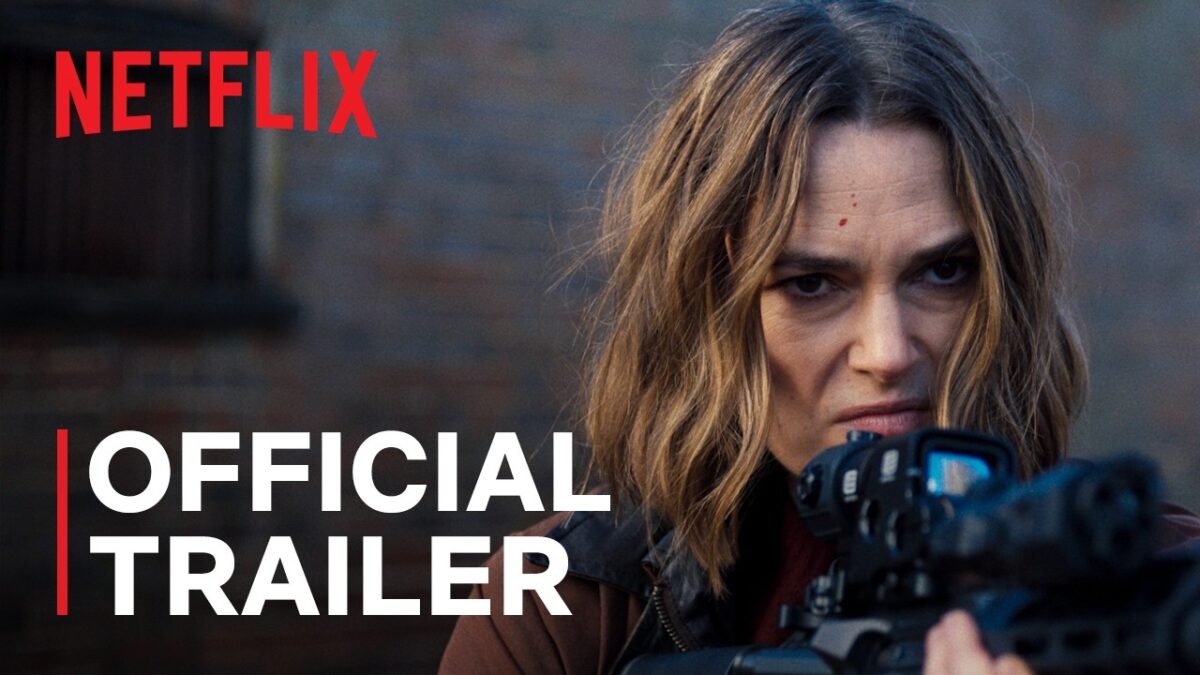
Picking up a few months later, Helen (Keira Knightley) finds her already precarious double life becoming exponentially more dangerous. Her relatively dull husband, Wallace (Andrew Buchan), is now the Prime Minister, meaning the secrets she acquires as a Black Dove—a member of a spies-for-hire organization that sells political, diplomatic, and industrial intelligence to the highest bidder—have never carried greater stakes. And then her longtime handler, Mrs. Reed (Sarah Lancashire), suddenly disappears.
Before vanishing, Reed offers Helen an ominous piece of advice. “The things you know right now, they make you an asset,” she tells her, implying that what Helen doesn’t know may be the only thing keeping her innocent—or at least non-complicit—in whatever darker machinery is operating around her. “Stay good at lying. That’s my advice for both our sakes.”
And then Reed is gone.

Without the woman who has effectively managed her secret life for years, Helen no longer knows where she stands or whom she can trust. Is her cover compromised? Has Reed abandoned her? Is something happening inside the Black Doves themselves? The arrival of Mr. Conteh (Babou Ceesay) as her new handler offers few reassurances. Helen doesn’t know him from Adam, has no reason to believe anything he tells her, and can’t entirely dismiss the possibility that he may somehow be connected to Reed’s disappearance.
Meanwhile, Helen’s best friend Sam (Ben Whishaw) discovers that his own attempts at something resembling stability are equally doomed. After being set up on a job and arrested for murder, Sam receives an offer from the mysterious Patrick (Sam Riley): eliminate a list of targets and, when the work is finished, Sam gets his freedom. The catch is that Patrick—unbeknownst to Sam at first—is working for a rival outfit intent on dismantling the Black Doves, and Sam’s targets are all connected to the organization.
Without getting too deep into the season’s increasingly tangled conspiracy, both threads are intensely personal and ultimately converge around Reed’s past: secrets from her younger days as a spy in Berlin and someone still nursing a deep desire for revenge. Barton once again proves adept at bringing these seemingly disparate plotlines together without letting the mechanics overwhelm the people caught inside them.
That tonal balancing act remains one of “Black Doves” greatest strengths. Barton writes with terrific dexterity, placing blasts of humor alongside pointed violence, sharp and witty repartee, and moments of drama that can be genuinely devastating. The shifts shouldn’t work as smoothly as they do. A brutal killing can give way to a withering joke; absurd criminal personalities can suddenly expose real vulnerability; an elaborate spy conspiracy can narrow, almost imperceptibly, into a story about whether two people truly believe one another—and whether they can entrust each other with their lives.

Knightley and Whishaw remain the heart of the series. When “Black Doves” turns toward its toughest material, they make those moments feel raw, vulnerable, and genuinely heartbreaking rather than merely functional connective tissue between spy-thriller set pieces. Their bond gives the show its center: Helen and Sam are lifelong companions, fellow spies and assassins, and essentially family, with a deep affection that feels lived-in even when nearly everything else around them is built on deception.
Knightley continues to excel at the contradictions inside Helen. She can be coldly efficient and ruthlessly deceptive, but the performance never lets you forget the cost of maintaining that facade. Helen’s greatest professional skill is lying, and Season 2 increasingly asks what happens when the people closest to her start paying the price for how good she’s become at it.
Whishaw is equally terrific, bringing a bruised vulnerability to Sam that makes his violence and deadpan humor feel like two sides of the same defense mechanism. He has the weary melancholy of someone who understands exactly what his profession has cost him but remains constitutionally incapable of fully leaving it behind. When the series asks Sam to drop the armor, Whishaw makes those moments land with bruising simplicity.
Much of the comic heavy lifting falls to the show’s assassins, and Ella Lily Hyland and Gabrielle Creevy remain terrific as Williams and Eleanor, bringing an almost absurdly casual attitude to murder that perfectly suits Barton’s mordant sense of humor. Ambika Mod, joining them as Laila, is a new comedic standout and fits brilliantly into their dynamic, immediately finding the same deadpan wavelength without simply duplicating what Hyland and Creevy are already doing. Together, the three provide some of Season 2’s funniest material and keep the show nimble even as the personal stakes grow more painful.

Elsewhere, Sylvia Hoeks and Sam Riley make for formidable adversaries, while Babou Ceesay brings real menace to Conteh, keeping Helen—and the audience—uncertain about exactly where he stands. It is, quite simply, a first-rate cast in a tremendously entertaining series, one that remains sharply written, shot, and edited while juggling dark comedy, bruising drama, and propulsive espionage thrills.
As with its first season, “Black Doves” is unexpectedly moving and, at times, quietly devastating. But Barton isn’t afraid to step on the gas this time around. By the back half, the whole thing feels almost combustible: the odds worsen, loyalties become less certain, and everyone starts wondering whether saving their own skin might require betraying someone else. Watching certainty dissolve under those conditions creates a gnawing anxiety, and the possibility that an allegiance could shift at exactly the wrong moment makes the season increasingly taut, engrossing, and desperate.
That mounting instability eventually explodes into a massive siege built around saving Reed. This sustained, full-throttle set piece feels like the season’s entire dramatic philosophy compressed into one sequence. It is harrowing and desperate, thrilling and fraught, yet still capable of becoming unexpectedly hilarious when the moment calls for it. Rather than undercutting the danger, the humor somehow makes the chaos feel even more characteristically “Black Doves.” Barton and company keep tightening the screws until it feels as though the entire operation could implode—or destroy its characters’ carefully constructed lives—in an instant.

And that volatility never feels empty or merely engineered for suspense, because “Black Doves” has made those lives worth caring about. Trust may be the most valuable currency in the spy trade, but the series understands that it is also the easiest thing to counterfeit and the hardest thing to recover once lost. Season 2 pushes that contradiction to its limit while preserving everything that made the first season so compelling: sharp humor, real vulnerability, terrific performances, and crackerjack thriller momentum.
Sam may be right that people like him and Helen don’t get happy endings. Season 2 certainly gives them plenty of reasons to believe it. But watching these characters desperately try to preserve their friendships, families, and fragile little corners of happiness as everything around them threatens to collapse makes “Black Doves” as affecting as it is enormously entertaining. It’s a terrific show, and Season 2 proves that pushing these characters closer to the edge only makes its peculiar mixture of heartbreak, hilarity, and espionage thrills hit harder. [A-]

Rodrigo Perez
Publisher: Source link