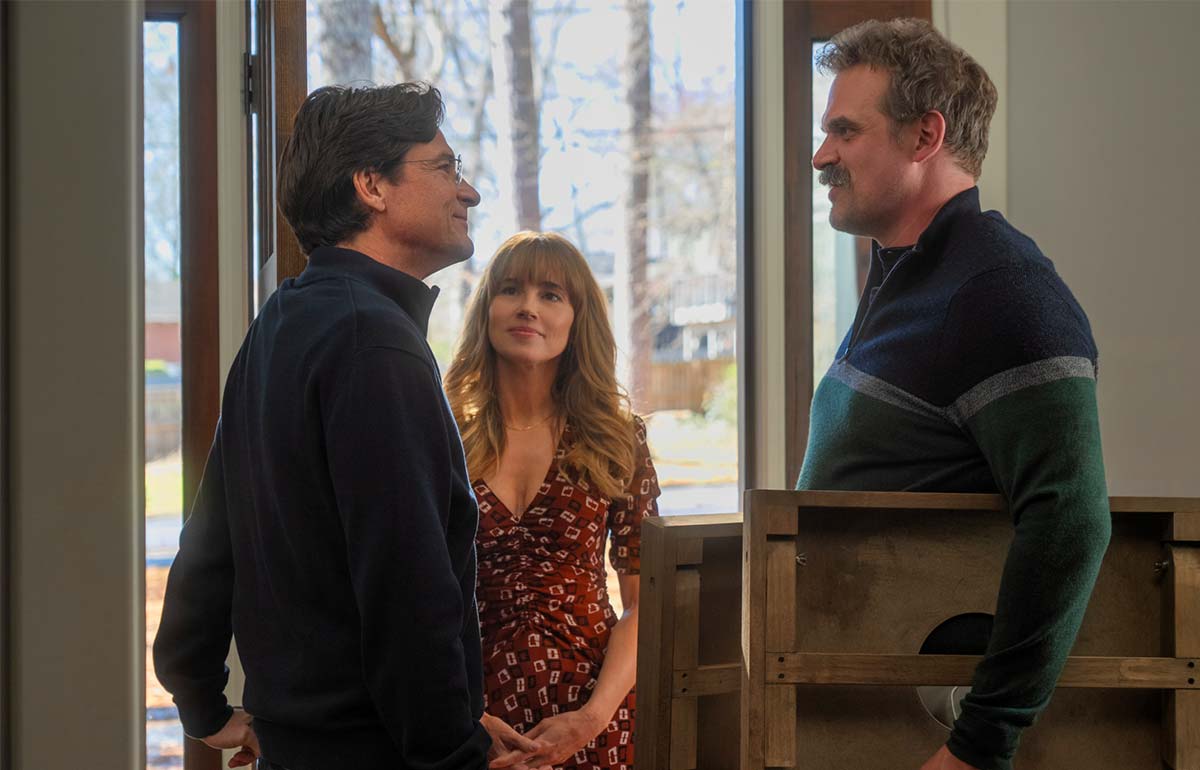
Jason Bateman and David Harbour Star In A Grim, Vital Study of the Male Loneliness Epidemic Wrapped in a Noir Mystery
Mar 23, 2026
Online discourse would rather pluck low-hanging fruit than take seriously exhaustively researched sociological data, which is why wading into the subject of male loneliness is less preferable than riding a bicycle without a seat. Men are, in fact, lonely, for reasons more vast and rich and downright troubling than self-pity; this is what the discourse gets wrong for the sake of blowing up on Bluesky. What it gets right, though entirely by accident, is that to overcome this epidemic, men must risk losing their man-cards by doing what culture tells them they should explicitly never do: being vulnerable with other men. Toxic masculinity is a suffocating rag that deprives men of oxygen. To breathe, they have to open up.
READ MORE: The 75 Most Anticipated TV Shows & Mini-Series Of 2026
Steven Conrad’s new HBO miniseries, “DTF St. Louis,” doesn’t seem to make any remark at first on either patterns of male loneliness or the havoc they wreak on individuals and on society. Frankly, it’s easier to take the view of Detective Donoghue Homer (Richard Jenkins), one of two investigators assigned to the case of one Floyd Smernitch (David Harbour), found dead in a bathhouse in the wee hours with no evidence pointing to the mechanics of his demise besides an old issue of Playgirl and a canned cocktail laced with a fatal dose of amphetamines. The case is cut and dry; therefore, so’s the show. It’s obvious. Floyd’s best friend, Clark Forrest (Jason Bateman), was having an affair with his wife, Carol (Linda Cardellini). Carol broke things off; Clark wasn’t ready for his extramarital boom-boom to end, and so he killed Floyd. End of.
Homer, of course, is spectacularly off base. He has to be, or else “DTF St. Louis” would be a mini-miniseries, and HBO isn’t in the business of airing one-off episodes clocking in at less than an hour. There is more to the love triangle between Floyd and Carol and Clark than toxicology reports and appearances allow: for starters, sexual exploration and discovery in the forms of BDSM and other kinks, financial instability, crumbling marital intimacy, the aching need to belong and find connection with others. Because there’s more to the love triangle, there’s more to the show as well. “Cornhole,” the premiere, plays grim and dour to establish the groundwork for Homer’s straightforward theory about Floyd’s death, which his colleague, special crimes officer Jodie Plumb (Joy Sunday), questions. She thinks there’s more to the crime than meets the eye, and in its way, “DTF St. Louis” validates her view with gradual tonal shifts across the next few episodes.
Don’t mistake this as anything other than a murder mystery, mind you; after all, there very much is a dead body at hand, and it happens to be one of the show’s principal characters. Unraveling how Floyd died and why drives the narrative. But “DTF St. Louis’” procedural elements are, if not in purpose then in meaning, secondary to Conrad’s study of isolation, mostly contextualized in male identity but with plenty of room for exploring its effects on women, too. Carol is slightly positioned as a black widow, which sounds like a lot of fun for Cardellini, one of America’s national treasures and most luminous TV stars; it’s not often that she gets to play figures straight out of seedy 1980s neo-noirs. But Carol is desperate, and verging on destitute. Between money troubles and matrimonial ones, notably the weird curvature of Floyd’s penis, she’s cracking for lack of anyone to turn to either for aid or for solace–other than Clark.
Support independent movie journalism to keep it alive. Sign up for The Playlist Newsletter. All the content you want and, oh, right, it’s free.
Bateman has a way of wielding factory setting niceness as a shiv: he’s superb at portraying the least trustworthy you know, and whose trustworthiness you also happen to believe in. Buying the notion that Clark would ice his own friend to have his wife costs little. It’s a cheap conclusion. He’s responsible for introducing Floyd to DTF St. Louis, the hookup app Conrad titled the series for, and the plot device that precipitates its inciting events; he’s a shameless, effortless liar; he’s a peeping Tom who surreptitiously leers at his sunbathing neighbor’s ass from the unwholesome safety of his little daughters’ swing set. But as “DTF St. Louis” unfolds, Conrad affords him grace that’s couched in his admiration of Floyd, on whose shoulders the “male loneliness” motif weighs heaviest.
Harbour, like Clark, is guilty of making harmful carnal choices and, as such, has fallen out of favor with a portion of the Jim Hopper fan club. What his performance looks like in “DTF St. Louis” is that of a man trying to reconcile with who he was, who he’s become, and who he could be if he puts in the effort to change, though in Floyd’s case, “change” mostly refers to his body. As Conrad gradually adds layers to Floyd’s persona, we come to appreciate that he’s bummed out over his physique, which is long gone to seed and was once the source of his self-esteem. The camera loves lingering on Harbour’s haunted and hangdog expressions; he and Floyd are both looking for help, for purpose, for anybody to sit down with them and tell them that everything’s going to be alright in the end. The character and the actor seem to wrestle with guilt and shame, the kinds of sensations that, left unchecked, can drag a man into the weeds.
As much as “DTF St. Louis” suggests that loneliness and the absence of healthy, rewarding male friendships are a pox on American men, the show likewise critiques paths that lead them to damnation: social media apps that crater one’s confidence with arguably greater efficacy than fulfilling the “social” part of the label. On the surface, Clark’s intention with DTF St. Louis is to two-time his wife, Eimy (Wynn Everett), a minor presence in the series, as if to reflect her husband’s ambivalence toward her. The cost of his scheme is Floyd’s life, a stark outcome echoed in how Conrad’s crew, the gaffer and DP, construct imagery–sharp contrasts in lighting, recurring use of dead space, close-ups on characters thinking their way through feelings they can’t quite understand, and facing consequences they’d never dreamed of. If “DTF St. Louis” is a product of America’s male loneliness epidemic, Conrad argues a more sobering reality: loneliness takes many forms, and thrives in this moment of the country’s history. [B+]
Publisher: Source link








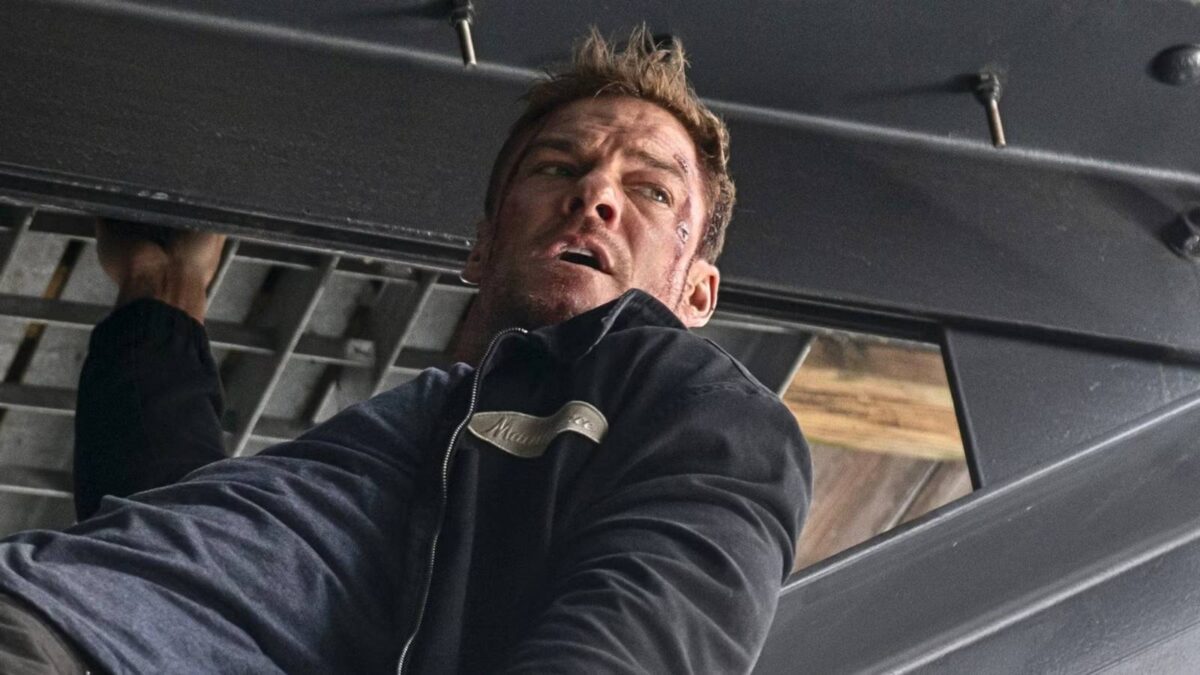
‘Reacher’s Action Thriller Spin-Off Gets Major Season 2 Update Following Premiere
For four seasons, Reacher has been one of the biggest TV shows on Prime Video. Based on the novels by Lee Child, the series follows former military police officer Jack Reacher (Alan Ritchson) as he wanders from place to place,…
Sep 18, 2026

One of CBS’ Longest-Running & Highest Rated TV Shows Is Coming To End After 30 Years
Along with countless scripted dramas, comedies, and action shows, CBS is well known for its impressive run of unscripted programs over the last 50 years. More recent years have included major competition shows like Survivor and The Amazing Race, along…
Sep 17, 2026

Prime Video Officially Launches New Deal That Changes the Streaming Game Forever
It seems like streamers raise their prices every day. At the end of August, Apple TV raised the subscription service price by $2, bringing it to $14.99 a month. Netflix, Disney+, HBO Max, Paramount+, and Peacock have all raised prices…
Sep 16, 2026
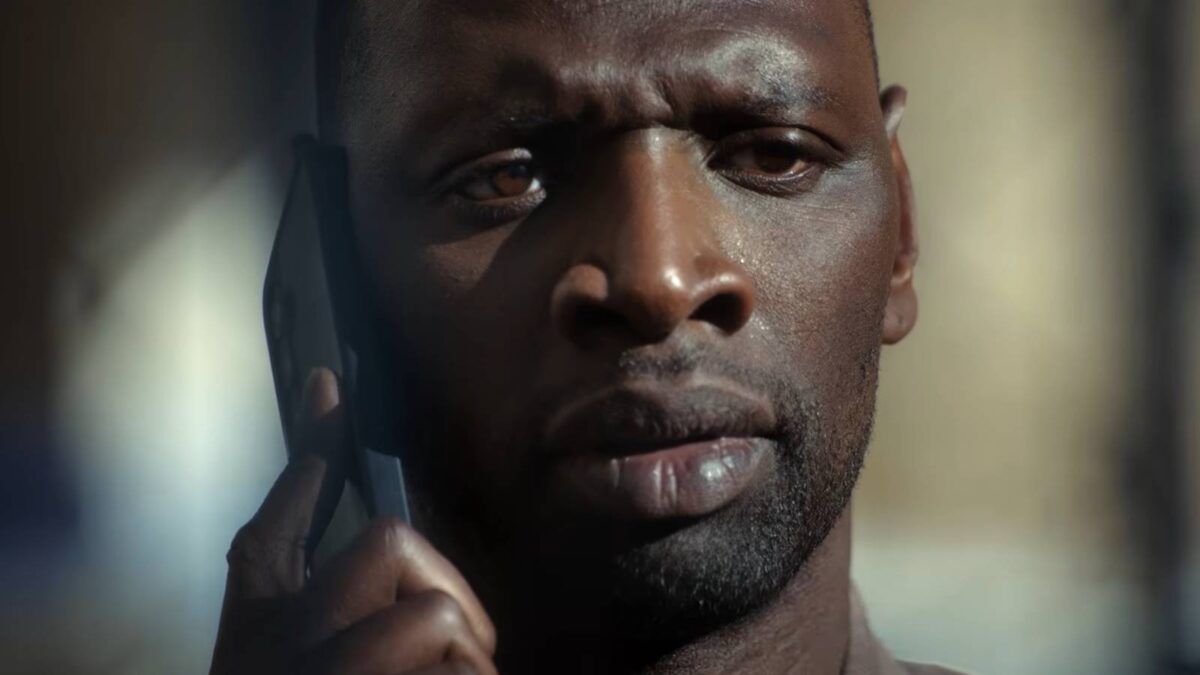
Netflix’s 10/10 Thriller Series Returns After 3 Year Absence With Explosive New Trailer
Over the last five years, Netflix has expanded heavily into non-English content, with international series taking an even bigger focus for the streaming giant. One of the biggest driving forces in that effort is the French thriller series Lupin, led…
Sep 15, 2026