
Maggie Gyllenhaalâs Monster Mash – Filmmaker MagazineFilmmaker Magazine
Mar 10, 2026
The Bride!
In the opening beats of The Bride!, the second feature written and directed by Maggie Gyllenhaal, the ghost of Mary Shelley (Jessie Buckley) mutters to herself from some dark corner of the subconscious ether. She rasps about the sequel to her most iconic work, Frankenstein, that she never got to write before she died in 1851. What would this hypothetical book be, she wonders: “Is it a horror story, a ghost story, or, most frightening of all, a love story?”
What follows is a cat-and-mouse road movie, a jewel-toned Jazz Age thriller, a romantic caper following Frankenstein’s monster—who goes by his maker’s name, Frank, or Frankie if you know him like that, and is played by Christian Bale—and the woman he dug up from a fresh grave to solve the problem of his century-long loneliness, also played by Buckley. Shelley’s ghost appears periodically, cast in uplit shadows like Boris Karloff in the original Frankenstein film, prodding the “reinvigorated” corpse to act fearlessly.
Calling from her home office the day after her London premiere, Gyllenhaal tells Filmmaker that while she enjoys the predictable rhythms of genre film, and relished making one replete with IMAX-level guns and getaway cars for the first time, she still believes that love trumps all else on the fear scale. “I think connection is scary for people. Real connection includes not just the parts of us that we’re proud of, but the parts of us that we’re terrified of and ashamed of—what I’ve been sort of calling the monstrous aspects. And to love someone or to connect to someone, including those aspects, takes real bravery.”
The tone of The Bride! is galvanizingly feminist in its anger. The Bride screams in frustration at her own situation, and it delightfully, if inexplicably, becomes a battle cry for women from Chicago to New York in 1936—“Killer Bride Ignites A Revolution” reads the headline. The result of being brought back to life by mad scientist Dr. Euphronious (Annette Bening), the Bride sports a frizzy bleached bob, a black tongue, and ink splatters that could be expensive Berlin-style tattoos. Frank is stitched up and bolted together, but remains ruggedly handsome with Bale’s eyes and tenor of total devotion—“She’s too beautiful,” he says of the Bride after he and Dr. Euphronious wiped the dirt off her. Their murders in nightclub alleyways and on ballroom floors are made in self-defense—the Bride keeps getting groped, or worse—but they’re branded as terrorists for a detective and his assistant, played by Peter Saarsgard and Penélope Cruz, to hunt down. A mob boss’s henchman is also on their tail, as Ida, a.k.a. the woman the Bride was pre-Frank, had been thrown in the ground for knowing too much.
“Most of the things she’s saying are braver than even what people are able to say right now,” Gyllenhaal remarks of her heroine, whose mantras are, “I would prefer not to,” and “Me too.” Such lines jolt us out of the fiction, to remember Gyllenhaal’s active involvement in the real-world #MeToo and #TimesUp movements. She told The Guardian in 2019, “There have to be consequences for disrespecting women sexually, or at all”; her script enacts such consequences.
The thread running through Gyllenhaal’s projects so far is messy women, “bad” women, women who don’t adhere to conventions. This is also not the first time she has reworked existing source material. “I had an imaginary dialogue going on with Elena Ferrante in my head as I was adapting her book,” Gyllenhaal says of 2021’s The Lost Daughter. “I feel like Ferrante was egging me on to be more and more truthful, more and more myself, in the same way that I think Mary Shelley is egging the Bride on.”
To make The Bride!, she had a lot less material to go off of. (Though she did have more resources: “It’s still very rare for women to make films, particularly at this scope and with these particular tools, like IMAX—on The Lost Daughter I had no dolly track and maybe four lenses to work with.”) Shelley wrote in the monster’s desire for a wife—“‘Shall each man,’ cried he, ‘find a wife for his bosom, and each beast have his mate, and I be alone?’”—though tragically resists giving him one. In Bride of Frankenstein, Elsa Lanchester in the titular role gets two minutes of non-speaking screen time.
Gyllenhaal had never seen the 1935 film nor read the Gothic novel until she met a guy at a party with a forearm tattoo of the Bride, and wondered what could be so compelling about a character who barely exists. “So I read Frankenstein, and I loved it, obviously, but I had this secret question when I finished it: is this everything that Mary Shelley wanted to say?” Gyllenhaal recalls. “It’s just my own fantasy. It’s just my own imagination. But if there were, like, five women being published in the early 19th century, how much did she have to censor herself? What was unpublishable that was on her mind—as we say in the movie, what was even unthinkable that was on her mind—and could we put it into this?”
The “we” in this film includes Gyllenhaal’s own family. This was not her first experience working with Saarsgard, her husband, but it was the first time she directed her brother. Jake Gyllenhaal plays dapper and dashing Ronnie Reed, a Hollywood film star who serves as Frank’s inspiration for an ideal masculinity and whose snubbing inspires another machine-gun showdown.
“It’s scary to work with people if you’re not sure that they respect you. We don’t have that problem,” Gyllenhaal said. “I learned this as an actress: when you feel respected and seen, you feel free to push yourself to the edge and actually learn something on a film, as opposed to pretending to learn something. And that’s what I want all my actors to be doing.”
Early reviews of The Bride! have not been as favorable as they were for The Lost Daughter, which earned Oscar nominations and Best Screenplay at Venice. “Leave her at the altar!” jeers the New York Post. A punk sensibility never appeals to everyone, but it’s beloved by those who need it.
“It is definitely a movie from a woman’s point of view. And I do believe that women have a different point of view, because we have such a different experience moving through the world. So much of cinematic language was created and invented by men, because women didn’t have access to the tools. We weren’t included,” Gyllenhaal says. “Something like 7% or 8% of the films last year were made by women, and yet so many of them are the films that we’re talking about. I think there’s an appetite for something new, in a new language, touching on new things—not just amongst women, but amongst everybody. Everyone says they want something new. Well, alright. Can you take it?”
Publisher: Source link



Netflix’s 10/10 Thriller Series Returns After 3 Year Absence With Explosive New Trailer
Over the last five years, Netflix has expanded heavily into non-English content, with international series taking an even bigger focus for the streaming giant. One of the biggest driving forces in that effort is the French thriller series Lupin, led…
Sep 15, 2026
Original ‘Yellowstone’ Dutton Favorite Officially Confirms ‘Marshals’ Return Interest
Yellowstone jump-started a generation-spanning story that has so far spawned four spin-offs that are all interconnected by the Dutton bloodline. While creator Taylor Sheridan has since branched outside that saga with Tulsa King, Landman, Mayor of Kingstown, The Madison, and…
Sep 14, 2026
Netflix Officially Cancels Its 2-Part Taylor Sheridan Replacement Western
Netflix Published Sep 12, 2026, 10:30 AM EDT Omar is an experienced editor and writer who sees life and storytelling as one and the same — there’s always a story to tell. He’s helped shape features, headlines, and coverage across movies,…
Sep 13, 2026
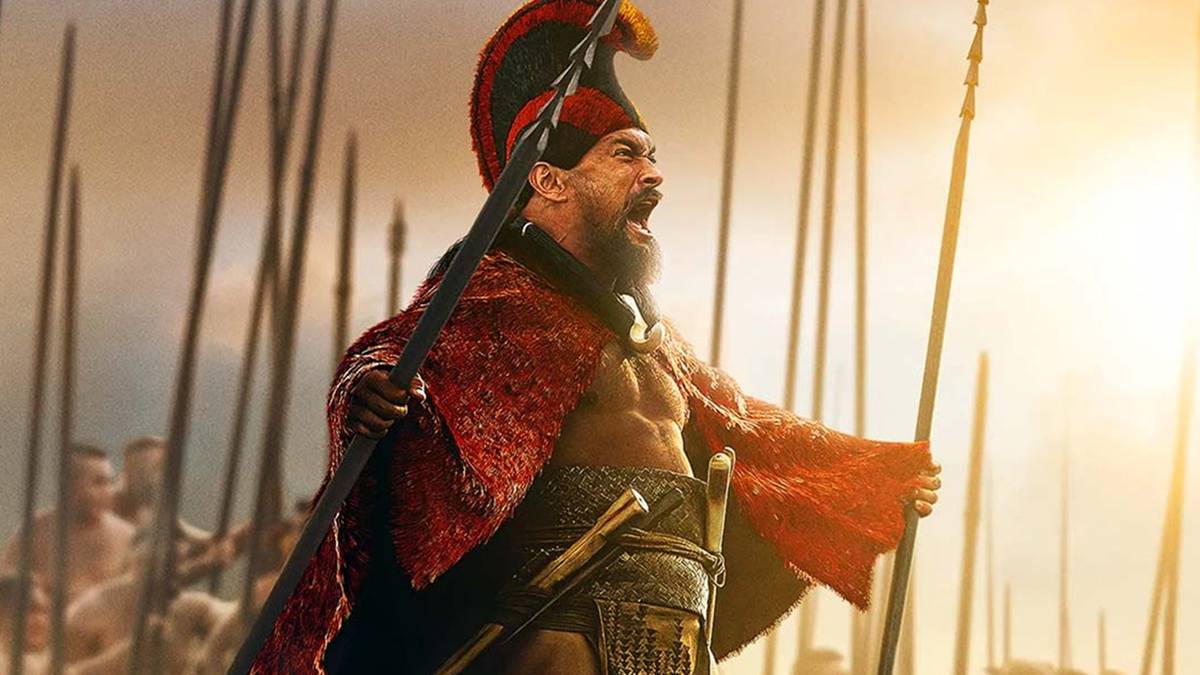
Jason Momoa’s Epic Historical Action Thriller Officially Getting New Release
Apple TV has established itself as a rising force in streaming entertainment. From Silo and Dark Matter to Pluribus and Ted Lasso, there is something for everyone, and not only that, but a ton of huge star power at the…
Sep 12, 2026