‘Spider-Noir’ Star Breaks Down How That Colossal Finale Fight Changes Everything for Sandman
May 27, 2026
Editor’s note: The following contains spoilers for the Spider-Noir finale.
Summary
In the Prime Video series ‘Spider-Noir,’ Spider-Man is reimagined as a PI named Ben Reilly in 1930s New York.
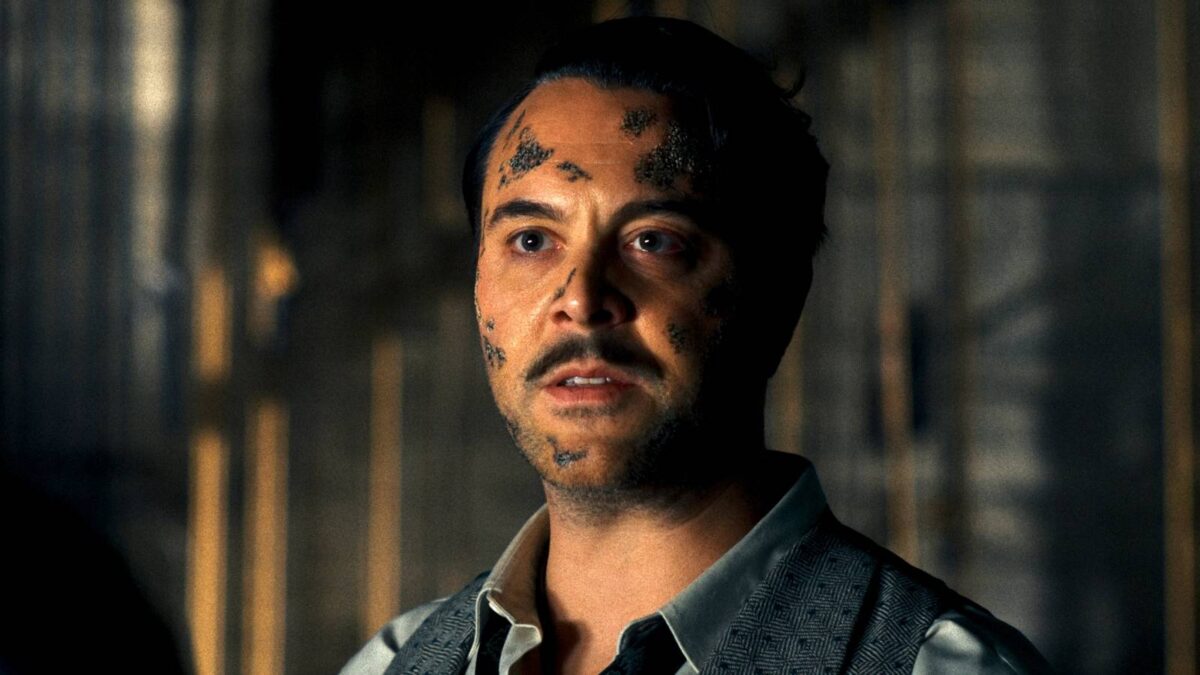
Sandman is a tortured, layered antihero tied to Cat, and practical prosthetics were used to bring the character to life.
Both B&W and color versions of the series shine, with the cinematic fights being stand-out moments.
From co-showrunners Oren Uziel (22 Jump Street) and Steve Lightfoot (Marvel’s The Punisher), the Prime Video series Spider-Noir is what happens when you take a Spider-Man story, give it a film-noir backdrop in 1930s New York, and place a down on his luck private investigator wrapped up in his own past at the center of it. Ben Reilly (Nicolas Cage) is the only superhero in a city full of crime that needs fighting without the desire to do much about it himself, having essentially retired The Spider following a tragedy. But with Sandman (Jack Huston), Megawatt (Andrew Lewis Caldwell) and Tombstone (Abraham Popoola) on the streets, and femme fatale Cat Hardy (Li Jun Li) in need of some assistance, The Spider is on the case. Because of the unique approach and blend of genres with Spider-Noir, what otherwise could have been just a straight-up villain in Sandman also digs into the layers of Flint Marko, the muscle as well as the love interest for Cat. A tortured soul fighting inner turmoil, Flint wants something more while also being consumed by his identity, making him a compelling anti-hero in the Spider-Verse. Collider recently got the opportunity for this in-depth chat with Huston about why he found Spider-Noir so appealing and his own family’s ties to noir storytelling. During the one-on-one interview, he discussed why there’s value in watching both the color and black and white versions of the series, how finding his character started with the voice, why the finale fight scene in the street was such a pinch-me moment, the relationship between Flint and Cat, how they pulled off the Sandman look, what he took from the experience of working with Cage, and how curious he is to know what could come next if there’s a Season 2. He also explained why he’s so passionate about directing a film about Joseph Merrick, who was also known as The Elephant Man. Collider: This is such an incredibly beautiful show to watch. I’m obsessed with the look of it. JACK HUSTON: That’s so nice to hear. It really is. It’s such a special show. That we got an opportunity to make something like this, I’m still pinching myself because it’s such an ode to all the films that built me and made me. That we’re getting to play around in that 1930s noir-esque landscape is amazing.
‘Spider-Noir’ Illustrates What Humphrey Bogart Would Have Been Like As Spider-Man
“What excites me is the idea of this over-the-hill private dick.”
Nicolas Cage as The Spider crouched on a desk in costume in Spider-NoirImage via Prime Video
There are so many layers to this that it feels like you could have been a fan drawn in by any one of those layers. Did you come to this as a Spider-Man fan, as a noir fan, as a fan of comic book characters and stories, or as someone interested in the time period? HUSTON: I’ve watched the Spider-Man films. I was never a comic book guy, but I’ve seen everything Marvel and Spider-Man, going back for years. I’m a huge fan of those shows that had come before. But this felt so unique and in and of itself. If you’re talking about the Spider-Verse, this lives on the outer stratosphere of where that universe takes you. But I was a huge noir fan. They say my grandfather (John Huston) made the first American film noir with The Maltese Falcon. And so, from a very young age, I was introduced to so many great films, including some of my grandfather’s, like Key Largo, The Asphalt Jungle and The Maltese Falcon, and Double Indemnity, The Big Sleep and The Third Man. I grew up watching those movies and loving them so deeply, but not every really believing I’d get an opportunity to do something like that, and so faithfully. (Creator) Oren [Uziel] said, when they first approached him to write this show, “I don’t really want to get into the young kid Spider-Man. That doesn’t necessarily excite me. What excites me is the idea of this over-the-hill private dick.” He was watching Humphrey Bogart movies and said to himself, “What if Humphrey Bogart happened to be Spider-Man?” That’s what led him down this amazing path, which is really cool. The brilliance of the writing is that it didn’t have to be about The Spider and in the Spider-Verse for it to be completely enthralling and beautiful on its own merits. I remember reading it for the first time and just not putting it down until I got to the end. It was one of those for me. I loved it … And also, you don’t have to be a Spider-Man fan to enjoy this show. That’s what’s so great about it. It was such great writing and so outside of the Spider-Verse, but at the same time, so true to it. When you do get those comic book moments, you’re so excited about it. That first time you see Nic [Cage] sling the web and have a fight, you’re like, “Okay!” The first time I saw the trailer, I got goosebumps. I was like, “Oh, my God, it’s so great.” That’s the fun part, when something you’re a part of gives you goosebumps. That’s pretty good. You’ve said that you worked on finding this character during the audition process. How so? Was it specifically in the scene and on the page, or was it more about what wasn’t specifically stated? How did that start to form for you so early on? HUSTON: I got sent dummy sides, but they were these rather intimate scenes between me and a woman called Faye. It wasn’t even the real name, which is so funny. I’d been tipped off that it was something to do with Spider-Man. I didn’t really know the depths of where they would go, but the sides were really great because they had been written by Oren. I don’t think he’d gotten to that particular episode or place yet. He just wrote it because he knew it was something that was going to come up. There was this beautifully tragic character who doesn’t feel like he deserves love and sees himself as just this oof from the outset. Still waters run deep couldn’t be truer of Flint. He’s a classic anti-hero. The major struggle that’s happening with him is internalized. It’s what’s happening within him. The thing that makes him stronger is also the thing that’s killing him. When I started the audition process, I found his voice. I wanted to give him this rather hard, New York, gravelly undertone, almost as if it’s hard for him to speak. I wanted to take it as if sand was in his throat. Once I found the voice, I ended up Zooming with (casting director) Rachel Tenner, whos’ just the best and who I love, and some of the producers. Luckily, they decided to go with me. It’s always quite nice reading for something. Sometimes you get offered things, and it’s actually really good, not only for oneself, but for honing your tool because it’s really fun to act. And then, when they do choose you, you feel like you’re really on the ball. You turn up on set and it’s not the usual feeling of, “When am I getting fired?,” which is usually what’s going through everybody’s head when they start a film, in general. It’s like, “Oh, shit, where are they going to find out I’m a complete fraud, and I’m terrible?”
Related
Nicolas Cage’s ‘Spider-Noir’ Is a Fun, Pulpy Superhero Throwback | Review
“Wherever I go the wind follows, and the wind smells like rain.”
There’s something particularly beautiful and exciting about watching this series in black and white. It truly adds so much to this whole balance between the hard-boiled noir story and the cartoonish comic book world. Have you watched this in both color and black and white? What do you love about what each of the formats can add to the viewing experience of this? HUSTON: Yes, I did. The first time I watched it, I watched it from start to end in black and white. And then, I went all the way back to the beginning and watched it in color. What I found was that it was a whole new experience. The black and white felt very true and honest and pure to what we were going for when we were on set, playing it to the noir. I think it’s gorgeous. I think it let out so much of the harsh lights and shades coming from the German Expressionist movement, where noir comes from. I think it stays very true to that. The funny thing is, when I went back and watched it in color, it was a whole new experience because you’re seeing things in a different way. Trayce [Gigi Field], our costume designer, is just phenomenal and put so many amazing colors and thought into this, as did the production design. Every element of this show was so well-thought-out. There were colors that I’d never seen before. You’ve never seen a suit of this particular orange or green or yellow, or whatever it was. There was something so specific. And you had to be very aware because they were shooting just with a single camera. You’d see it in black and white, but they had to account for it being turned into color too, so many colors didn’t work in both black and white and color. You had to be very aware of that. If [Li Jun Li] wore red lipstick, it just looked like her lips were black, so you had to use certain shades. The German Expressionist movement was so visceral with such vivid color that it gave lines and characters a different flare. I watched it with different eyes. The show felt like something different. It was the most amazing experience. I loved it.
Playing a Comic Book Villain in the Big ‘Spider-Noir’ Finale Fight Scene Was a Pinch-Me Moment for Jack Huston
“That scene, specifically, was so incredible because it’s the culmination of the entire show.”
You got to do a fight scene in the finale that involved The Spider up against Megawatt and Sandman. What was that like to shoot? Did that just feel like one of those cool comic book moments? HUSTON: Yeah. That was the pinch-me moment. We were on the back lot of Universal. We’d been shooting at Sony on some of the old MGM lot, which is where they shot The Wizard of Oz. It’s a massive soundstage that’s incredible. We were also on the backlots of Warner Bros. and Universal. We thought to ourselves, “This is probably where these movies were made, and they were walking this same little avenue from their trailer to the set in that same way.” It was such an amazing thing. We loved it so much. That scene, specifically, was so incredible because it’s the culmination of the entire show. You find yourself in the big finale doing the big fight scene. It’s a rather redeeming finale for my character, where he finds himself on the right side and goes against and after the megalomaniac that is Megawatt, which Andrew Lewis Caldwell does so well. It was amazing. You don’t really get the opportunity to shoot in Los Angeles much these days. That we shot the entire show here and in Downtown Los Angeles, which lends itself so perfectly to 1930s New York, with the Deco-esque movement that was going on there, it actually felt more New York period than I imagine even New York would feel. That whole sequence is cool because you get that moment of the big comic book fight scene, but then you also have the more emotional moment when Cat is attacked. Since we never really get to know how your character is feeling because he’s not a man of many words and he doesn’t verbalize his emotion, what do you think he felt in that moment? HUSTON: He loves Cat with all his heart. He’d do anything for. He has that great line, “I would have done anything, but you didn’t ask. If you’d asked, I would have done anything. I’d do anything for you.” He’s so heartbroken that she didn’t even give him the respect to speak to him about it. I think in that last moment with Cat, it’s an opportunity to prove his love, as much as anything. The show is so beautifully curated and orchestrated, where it takes you and that it does make you second guess certain things with their relationship and what she’s doing. I think it’s a very appropriate end, and I just wonder what will happen with Flint now and Cat, and where that takes us. It’s a lovely mystery that hopefully will unfold further. Have you been told whether you’ll get to, and we’ll get to, find out more about this journey if there’s a Season 2? HUSTON: I haven’t got a clue, literally. I’m not lying on that one. Not even a slight clue or indication. Obviously, everything is going to be based on performance and seeing how it does. A lot is riding on this show, quite rightly so. It’s a phenomenal show. The creators and the studios have been unbelievably supportive and just amazing with this. It couldn’t have had more love put into it from everybody. It’s really, really become a favorite for everyone, that we’re getting to work on this. It’s rare that you get to actually honestly speak and do interviews when you’re truly excited about a project. In my office, I’ve got my Sandman prosthetics. I keep everything there. I have them front and center in my office now. I love them so much. I just can’t believe I got to go and have so much fun.
Related
Nicolas Cage’s ‘Spider-Noir’ Alter-Ego Has Been Revealed — and It’s Not Peter Parker
Spider-Man’s first live-action series will be his darkest adventure yet.
How did they do the whole Sandman aspect of this character, especially as the look evolves? HUSTON: It was all applied. There were prosthetic pieces when it was half-Sandman. We had different stages of how far I’d go. Everything was in-camera. The only thing that I think they added was the movement of the sand. They wanted everything to feel very tactile and very real. We wanted to be able to play off each other. It started a bit longer, but we got it down to an hour and a half, even for the full transformation, which was amazing. Usually, all of that was hand-painted, which was so beautiful and amazing. They were incredible. What they put together was just amazing. The noir layer of it all really adds to your character and works to his advantage because he is somebody that’s fighting with the hero of the story. We would probably see him as just the villain if we didn’t have that noir element, but instead, we get to know him through his connection to Cat, who is the femme fatale, and because we have that relationship and that love story, we get to know your character in a way we wouldn’t have gotten to know him in a straight comic book story. HUSTON: I know, and that’s such a nice thing. I love that you say that because I don’t think I’m really that interested in just playing the straight villain. I don’t think it’s that simple. I think good people can do bad things in desperate situations. That’s exactly what everybody is going through. Every single person has their own struggles. We’re talking about post-WWI, the Depression and Prohibition. It was a hard time in New York. These guys went and fought for the country and came back to a country that had forgotten them and didn’t have a pot to piss on. It’s a very rich canvas, that period, alone. That’s probably why Oren and Steve [Lightfoot] were so excited about delving into this specific period. For history buffs, to stack the deck, you want to add the harshness of the times, which really adds to these characters because they have to make difficult decisions, not all of them good. You do what you can to survive, and you do what you can for the ones that you love. That noir element also gives you a cool nightclub to be a part of and hang out in. HUSTON: That was the best set. The Alcove was the coolest set. I walked on that set for the first time, and I was like, “I wish this existed in real life. I’d come here every night. This is the best place, ever. Why doesn’t this club exist?” It was amazing.
Working With Nicolas Cage on ‘Spider-Noir’ Was Infectious for Jack Huston
“It raises everybody’s game because this person that you think has done everything was like a kid in a candy store.”
Nicolas Cage as Ben Reilly holding The Spider mask in his hands in Spider-NoirImage via Prime Video
What did you learn from the experience of doing this with Nicolas Cage? He’s someone who’s willing to take chances that a lot of actors of his caliber either don’t make or aren’t in a position that they can make. How did that shape this experience? HUSTON: That was one of the few things that was certain. I was told that Nic Cage was playing the character of Ben Reilly, and I thought it was the most incredible piece of casting, ever. There’s nobody but Nic for that role. My first week on the show was me and Nic beating the crap out of each other on the top of a skyrise. That was our entire first week, and we had the best time. He’s got the energy of a 20-year-old. He’s like an encyclopedia of film, literature and music, and it’s his favorite thing to talk about. He’s still excited about the job and where he can take it and what he can do to experiment. It’s infectious, and it raises everybody’s game because this person that you think has done everything was like a kid in a candy store. I actually still can’t quite believe how hard he works on a daily basis. Whatever we did, he did 10 times more. He’s a wonderful guy, and an incredibly inspiring actor. He’s a lovely, very present scene partner. All of us literally can’t say enough good things about him. He’s just wonderful. He just seems like a lot of fun, which must help during the long hours. HUSTON: A lot of fun, and it was so long. I did look at him at points because it was a long time, like six months, of long hours. You can get burned out pretty quick. I know it took him to the limit. Many actors wouldn’t have been able to sustain that, at half his age. That’s what’s so noble about him. He really does take it seriously, and he loves it. I feel very honored to be a part of it with him.
Related
Nicolas Cage’s ‘Spider-Noir’ Leaves the Door Open for Season 2 and Beyond [Exclusive]
Cage is “a spider pretending to be a person” in the upcoming live-action series.
I love the moment you guys have on the roof together in the first episode because there’s something very classic about that good guy/bad guy confrontation on a roof where there are punches, and you’re dangling him over the edge. HUSTON: Yeah, completely. What was it like to shoot that? When it’s something that is so deliberate, as opposed to a quick-moving fight or action sequence, does it feel like a different kind of challenge?
HUSTON: Yeah. Harry Bradbeer, who directed the first two episodes and who’s one of our great EPs, knew it was a big fight. That was our Spider-Man moment. They dedicated a lot of time to that, and we had the most amazing stunt crew. Me and Nic really did the majority of that, and it was so fun. You’re always trying to one-up each other and being like, “Okay, let’s do this, and let’s do that. How much more can we do? How far can we take it?” I remember that bit, with me just dangling him off the edge. Nic is hysterical, as well. He has a way of delivering lines, so you were always kept on your toes. It was a good five days of us up there doing that scene. It’s so interesting to end your character at a place where Ben essentially saves him at the end of the season, and you really take a journey to get to that point and have it feel earned. HUSTON: With no power comes no responsibility. When Ben takes that responsibility back on himself, he’s a good guy. Whatever he thinks of himself, he just fundamentally is a hero. He’s a good person. He does the right thing. He hates that he does the right thing, but he does the right thing, always. It’s a really interesting character. I think the exploration of where he’s at in this, we haven’t come to a Spider-Man at this stage of his life. We’ve never seen that before. There is something new for everybody, really.
While There Is Resolution in ‘Spider-Noir,’ Jack Huston Is Curious To See What Could Come Next
“If you can do anything you want, it gives you license to just be creative. It gives you artistic license just to go there.”
Jack Huston as Flint Marko pulling his fist back before punching someone in Spider-NoirImage via Prime Video
Are you curious about where all of this would take your character next? HUSTON: Yeah. There’s a lot that’s resolved. I always think about the future and wonder, “What does that resolution mean?” In the comics themselves, the Cat Hardy and Ben Reilly characters are much more explored, going forward. I’d be fascinated to see, if it is taken forward, where that would go. I always say that we’re living inside the Spider Universe with these parallel worlds going on. It’s crazy because, every time you’re on set, and you’re like, “We can’t do that,” they’re like, “Why not? We can do that.” That’s the best place to be. If you can do anything you want, it gives you license to just be creative. It gives you artistic license just to go there. Has it been hard to figure out how to follow this up and find the next thing that gets you as excited? HUSTON: I just try to find good work. I always try to find things where I fall in love with the character, and I found that with this. I’m really enjoying the other side of the camera these days, so I’m about to start my next directing venture. My last film, Day of the Fight, recently came out on Paramount+, and I’m so proud of that movie, but we had a hard time. That’s a black and white, 1980s period story about a boxer. It’s not easy to get those films out there. They’re few and far between, but I have a deep love for it. So, I’m trying to concentrate on the next one right now, which is fun. It’s about Joseph Merrick. My mentor growing up was John Hurt, and my favorite film is The Elephant Man. I found a way to deal with all the less explored moments of his life, of his childhood, and of the last three months of his life.It’s a completely new thing. I don’t want to step on any toes because I hold that in such high esteem. This lives by the side of that beautiful film and has a real reason to tell that story. So, I wrote that script, and I don’t want to jinx things, but we’re going along and we’re hopefully going this year. We’ll see. I couldn’t be more excited about that project. It’s the most beautiful and tragic, but uplifting and hopeful film. I feel like we need someone like Joseph in our lives right now who, against the greatest of adversity and the worst physical afflictions and the Proteus syndrome that he had, always kept his kindness, his goodness, his heart and his capacity for love. I’m always taken by those kinds of stories because I feel like that’s what we need. Films can change you. Television can change you. It can make you a better person. It can make you think about certain things. It can teach you and give you a moral compass. It could maybe help a little bit. I would like to tell those kinds of stories. What are you calling that film? HUSTON: As of now, Joseph Merrick. I’m pretty excited about it. I woke up one day, and I was like, “God, I just wish I could make something like The Elephant Man.” And then, surprisingly, I got in touch with all the producers who’ve been trying to put this film together. They said, “We love your movie. Would you be interested in taking this on?” I was like, “Are you kidding? This is my dream.” So, I’m pretty happy. Spider-Noir is available to stream on Prime Video.
Release Date
May 27, 2026
Network
MGM+
Showrunner
Oren Uziel, Steve Lightfoot
Directors
Harry Bradbeer
Publisher: Source link


Netflix’s 10/10 Thriller Series Returns After 3 Year Absence With Explosive New Trailer
Over the last five years, Netflix has expanded heavily into non-English content, with international series taking an even bigger focus for the streaming giant. One of the biggest driving forces in that effort is the French thriller series Lupin, led…
Sep 15, 2026
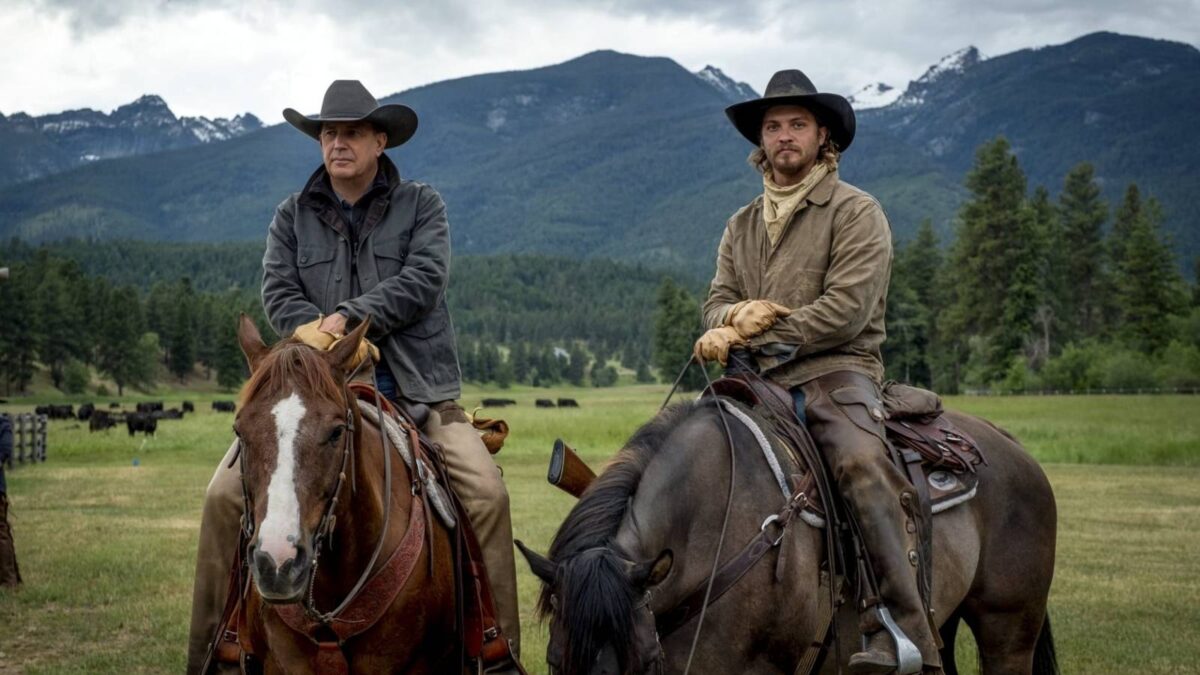
Original ‘Yellowstone’ Dutton Favorite Officially Confirms ‘Marshals’ Return Interest
Yellowstone jump-started a generation-spanning story that has so far spawned four spin-offs that are all interconnected by the Dutton bloodline. While creator Taylor Sheridan has since branched outside that saga with Tulsa King, Landman, Mayor of Kingstown, The Madison, and…
Sep 14, 2026
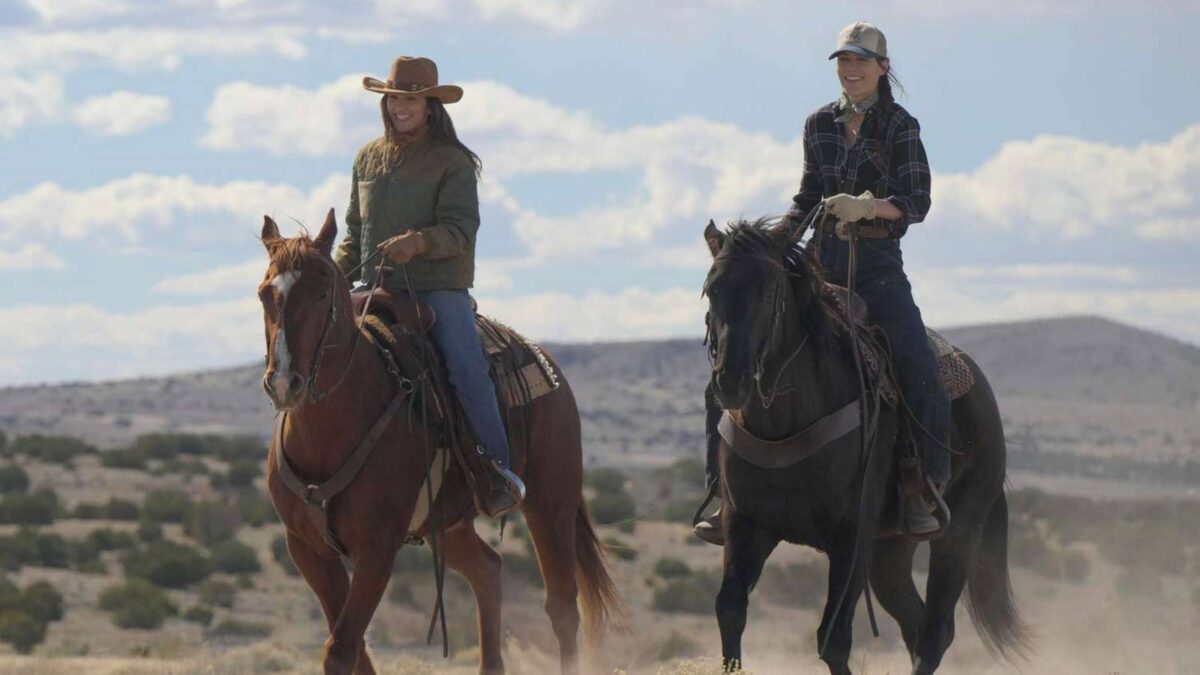
Netflix Officially Cancels Its 2-Part Taylor Sheridan Replacement Western
Netflix Published Sep 12, 2026, 10:30 AM EDT Omar is an experienced editor and writer who sees life and storytelling as one and the same — there’s always a story to tell. He’s helped shape features, headlines, and coverage across movies,…
Sep 13, 2026
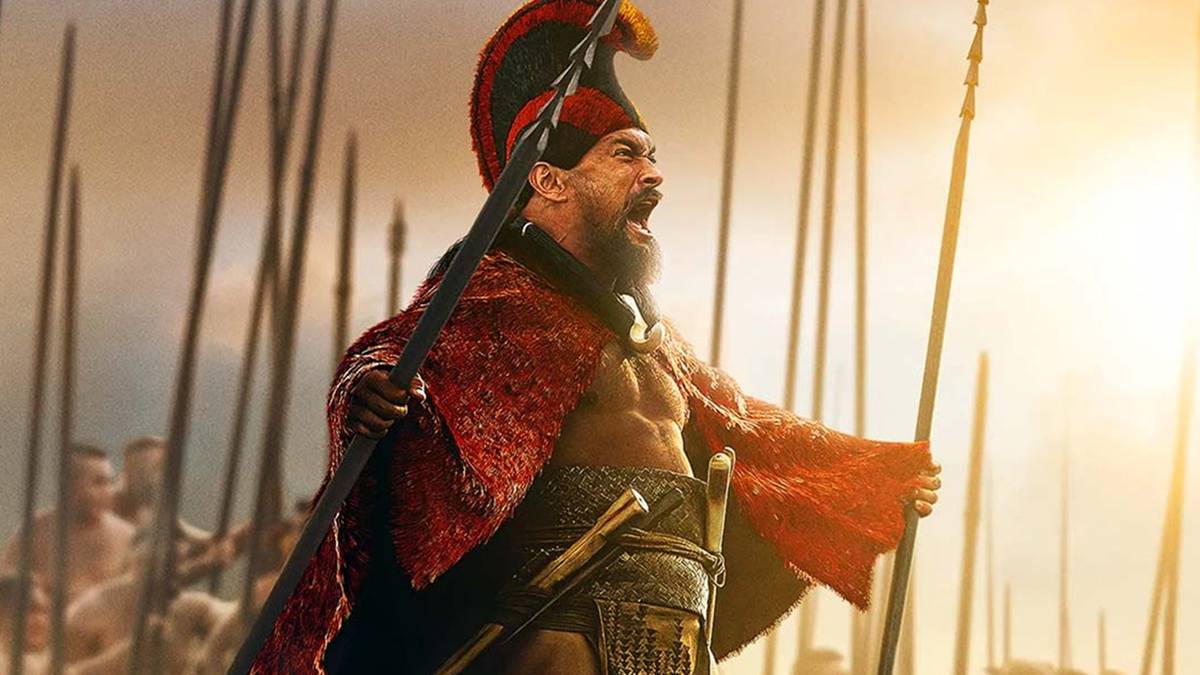
Jason Momoa’s Epic Historical Action Thriller Officially Getting New Release
Apple TV has established itself as a rising force in streaming entertainment. From Silo and Dark Matter to Pluribus and Ted Lasso, there is something for everyone, and not only that, but a ton of huge star power at the…
Sep 12, 2026