
Errol Morris’ Netflix Documentary Walks a Fine Line Between Investigation and Conspiracy Theory
Mar 8, 2025
In 1969, the dream died. Chances are you’ve heard that one before. Also, it is quite likely you know pretty well what dream we are talking about: it’s, of course, the hippie dream of a more equal and just world based on free love and community. This dream didn’t just die of natural causes. Instead, it was murdered by Charles Manson and his so-called family, stabbed to death like actress Sharon Tate, her friends, and the LaBianca couple. That such wide-eyed, peace-and-love-touting youths like Tex Watson, Susan Atkins, Patricia Krenwinkel, and Linda Kasabian were able to commit such heinous crimes is something that continues to shock the American public up to this day. That they seemed to be under complete control of a mad-looking criminal such as Manson is something even more terrifying. But the reality of what happened in the days – or even years – that preceded the Tate-LaBianca murders and the trial that followed them might just be a little more complicated than we believe. Or, at least, this is what documentarian Errol Morris tells us in his new film, Netflix’s Chaos: The Manson Murders.
Known for acclaimed works such as 1988’s The Thin Blue Line and 2008’s Standard Operating Procedure, Morris chose to adapt a book by Tom O’Neill and Dan Piepenbring that shines a whole new light on the Manson family crimes. Also titled Chaos: The Manson Murders, O’Neill and Piepenbring’s work defies the classic Helter Skelter theory, according to which Manson ordered his followers to kill Tate and the LaBiancas in order to pin it on the Black Panthers and start a race war – a theory proposed and defended by writer and prosecutor Vincent Bugliosi. Instead, the authors suggest that Manson might’ve been an FBI/CIA plant in a crusade to smear the names of the social movements that were on the rise in the 60s. It’s a wild proposition, and one that Morris doesn’t take at face value. The result is a documentary that walks a very fine line between conspiracy-fodder and actual thinker, but that ultimately succeeds in making us question the fictions we create to make sense of the chaos that is reality.
‘Chaos: The Manson Murders’ Fails in Its Boring Visuals
Mind you, it does so in a way that makes you think “perhaps this could’ve been an article.” After all, Chaos: The Manson Murders is very by-the-book when it comes to its visuals. Interviews are interspersed with not-too-revealing images of the crime scenes, photos of victims and killers, shots of life at the Manson family ranch. There’s a fast-paced editing that is meant to make it all a little bit more dynamic, but it isn’t enough to dispel the feeling that we have seen this all that before. Just by looking at it, you would say that Morris’ Netflix project is pretty much the same as any other true crime Netflix project, with the added ominous soundtrack in case you haven’t realized just how scandalous and scary everything is.
Not even the songs provided by Manson himself do the trick. The inclusion of Manson’s music in Chaos seems to serve a dual purpose. The songs are there to illustrate one of the theories that Morris explores: that Manson wasn’t really trying to kill Sharon Tate, but was actually targeting producer Terry Melcher, who used to live in Tate’s house. This theory purports that Manson was actually moved by his resentment towards the music industry that did not recognize his talent – and one’s got to say that he was not at all a bad singer. Thus, it makes sense to show viewers what kind of music the movie is talking about: not murderous anthems, but hippie ballads fit to appear on a Beach Boys’ album.
Related
Out of Netflix’s Countless True Crime Documentaries, This One May Be the Best
It took decades to find out this girl’s true identity.
But given the documentary’s overall vibe, Manson’s music also seems to serve to humanize him, though not in a way that makes us understand that humans are capable of terrible things. Surrounded by O’Neill’s conspiracy theories and the creepy soundtrack, they function almost like bizarre internet posts highlighting that Hitler used to be a painter, pointing at this monstrous thing and saying “isn’t it freaky that it also has feelings?” It’s something that seems very beneath Morris, and one has to wonder the extent of higher-ups interference in the project in order to make it more like sensational shows such as Monster: The Jeffrey Dahmer Story and less like classy true crime investigations such as Capturing the Friedmans.
‘Chaos: The Manson Murders’ Strength Lies in Its Interviews
Image via Netflix
Thankfully, Chaos: The Manson Murders doesn’t rely solely on these tidbits. Morris’ strength lies in the interviews he conducts and the narrative he’s capable of creating through them. The director is not at all interested in making a straightforward adaptation of O’Neill and Piepenbring’s book, instead chatting with many actors involved in the Manson case, from Bugliosi to Manson family member Bobby Beausoleil. In his conversations, in lieu of trying to prove O’Neill and Piepenbring’s point, he searches for other reasons behind why Manson and his followers did what they did. As a matter of fact, he even goes as far as telling O’Neill point-blank that Manson having been trained by the CIA doesn’t seem plausible at all – something that is made even clearer by the fact that O’Neill can’t prove any of his far-fetched theories. Nevertheless, Morris recognizes that, while completely out there, there is some semblance of truth to be found in what O’Neill has to say. Indeed, the Tate-LaBianca murders were the perfect propaganda piece for governmental organizations aiming to disrupt the anti-war, hippie movement.
But it feels weird, in the day and age of QAnon, to see a serious documentarian give so much credit to a conspiracy theory. Especially in the first few scenes of O’Neill’s interview, you can feel your skin crawl due to how mid-2000s History Channel it all sounds. However, what Morris wants by placing this conspiracy theory alongside other, much more plausible or accepted ones, is to make us question what is reality and what are the stories we tell ourselves when it comes to crimes such as the ones committed by the Manson family. When placed side by side with Bobby Beausoleil’s claims that Manson was just a paranoid cult leader trying to get everyone in his group with their hands dirty in order to avoid getting snitched for another crime, doesn’t Bugliosi’s Helter Skelter theory sound just as bonkers as O’Neill’s?
At one point, in his interview via telephone, Beausoleil says a sentence that sums up Chaos: The Manson Murders pretty well: “The problem with this story in particular is that people are very fond of their fantasy.” Are we really looking for the truth when we examine and reexamine the Tate-LaBianca murders? Or are we simply trying to make sense of a chaotic reality? Is Manson really a criminal mastermind? Or is he simply a failed musician that got caught up in his own blunders, as Beausoleil paints him? Most likely, we will never know. But, by God, do we make up fantasies to fill up these holes in our worldview! And, by God, is Errol Morris going to put them under the microscope.
Chaos: The Manson Murders is now available to stream on Netflix in the U.S.
Chaos: The Manson Murders
Netflix’s new documentary walks a very fine line between conspiracy-fodder and actual thinker, but ultimately succeeds in making us question the fictions we create.
Release Date
March 6, 2025
Runtime
96 Minutes
Pros & Cons
Morris insn’t afraid of challenging his interviewees.
The movie succeeds in making us question what is fact and what is fiction when it comes to the Manson case.
Visually, the documentary doesn’t look that different from more run-of-the-mill Netflix true crime productions.
The inclusion of Charles Manson’s songs creates a freak show effect that cheapens the movie.
Publisher: Source link






Disney+ Officially Exploring Major Streaming Platform Change
With Toy Story 5 making big bucks at the box office and The Devil Wears Prada 2 crushing the streaming numbers, Disney is poised to keep the momentum going. The media giant has been cutting hundreds of jobs in addition…
Aug 6, 2026
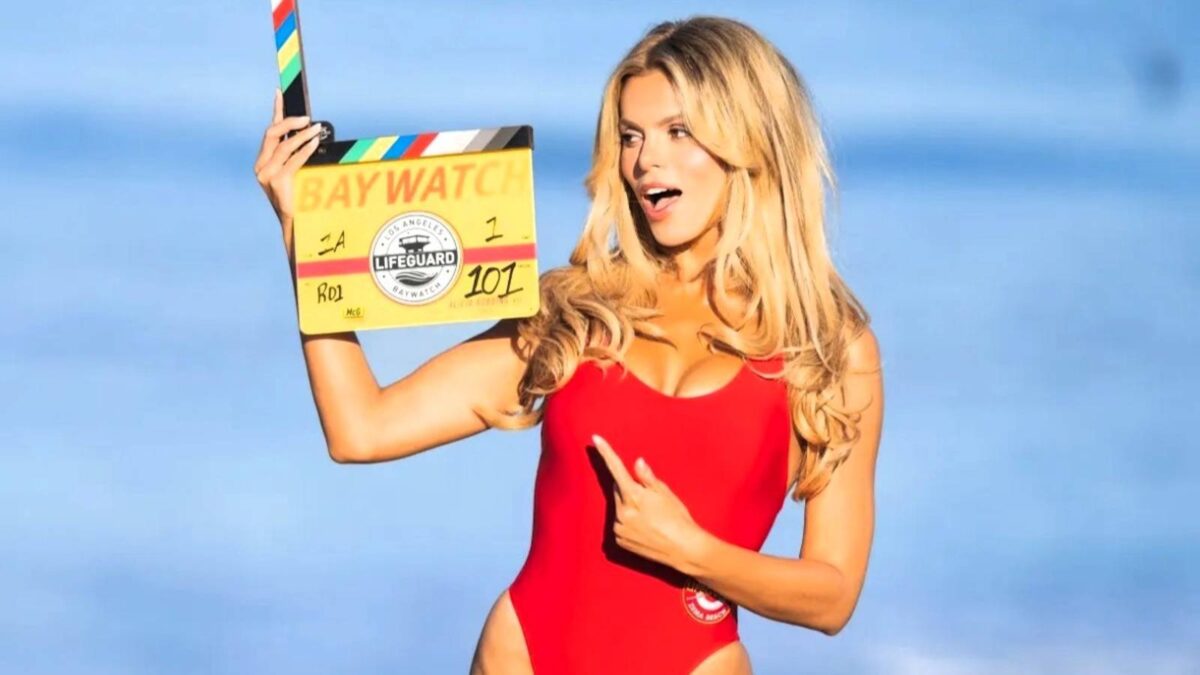
‘Baywatch’ Reboot Officially Confirms Streaming Release Details
When Baywatch signed off in 2001, it had already spent the better part of a decade as the most-watched show on the planet, airing in more than 200 countries and reaching over a billion viewers a week at its peak.…
Aug 5, 2026
Origins’ Sets Return Date With Mark Harmon Getting a Season-Long Arc
Mark Harmon played special agent Leroy Jethro Gibbs for 18 seasons of NCIS before leaving in Season 19. The original show has soldiered on without him — it will soon be back for its 24th season — but the franchise…
Aug 4, 2026
Forget ‘Lioness,’ Paramount’s 114-Episode Non-Stop Action Thriller Is One of the Biggest Shows on Streaming
Taylor Sheridan's hit action thriller, Spec Ops: Lioness, is nearly back with its third season. Season 3 of Lioness debuts on Aug. 2, dropping a new episode each week. While Taylor Sheridan fans are re-watching the series (and Sheridan's other…
Aug 3, 2026