Barbara Kopple Looks Back on American DreamFilmmaker Magazine
May 31, 2026
American Dream
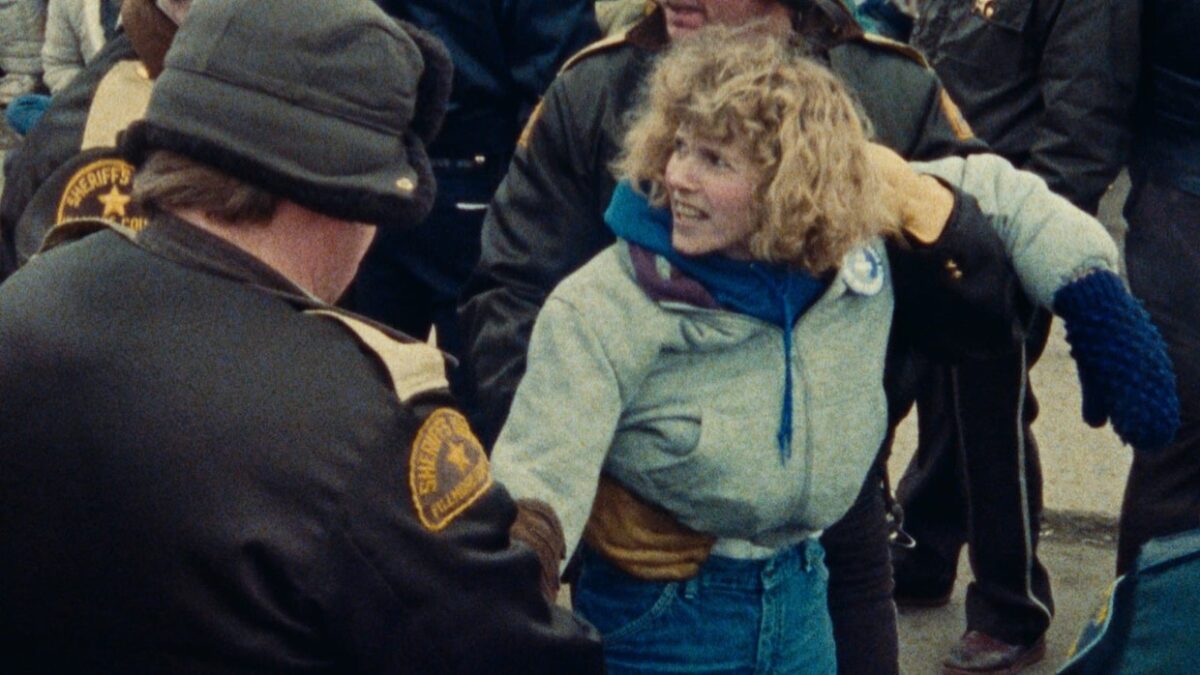
Set in Austin, Minnesota, a company town where nearly every resident has a connection to food-processing giant Hormel Foods, Barbara Kopple’s American Dream (1990) embeds with unionized Hormel meatpackers as they respond to a 23 percent hourly wage cut in a time of unprecedented corporate profits. Kopple and her collaborators embedded with the United Food and Commercial Workers Union Local P-9 for a year. The film spans the Austin local’s initial PR push, their tactical disagreements with the UFCW leadership, their protracted contract negotiation process, and, ultimately, their year-long strike from 1985 to 1986. Gathering a wide array of voices—workers, union representatives, and labor consultants as they debate strategy and stakes, the film is a multivalent portrait of a community in the process of splintering, captured from its first creaking moments to its decisive collapse.
American Dream is an uneasy film. It is both a counterpoint to and continuation of Harlan County, USA (1976), Kopple’s earlier, more triumphant labor documentary (which is not to say it is any less imbued with danger and loss). In American Dream, Kopple’s formidable artistic skills effectively charge each scene with imminent threat, foreshadowing the rapid encroachment of the union-busting Reagan era. The tides are turning; labor strikes would decline precipitously from 1981 onwards, in the wake of the Professional Air Traffic Controllers Organization strikes and the Reagan administration’s reconstituting of the NLRB to favor management. Halfway through the film, national UFCW vice president Lewie Anderson accuses the breakaway Local P-9, diverging from the national union in strategy and goals, of internalizing the individualist ethos of the time: “The Austin program, it occurs to us, is symptomatic of Reagan’s philosophy: ‘I’ll get mine and to hell with everyone else.’” The film traces a heartbreaking path: Which ship to jump on when we’re all going down?
While preparing to talk with Kopple on the occasion of Janus Films’ 4K digital restoration and theatrical rerelease of American Dream, I listened to an archival radio interview she did with Studs Terkel, one of the great chroniclers of working people in 20th-century America. (The Studs Terkel Program ran on Chicago station WFMT for nearly 50 years.) Studs is emphatic that there is only one film he imagines that he’ll still be thinking about for at least the next decade: American Dream. “This is what happens to a town,” he says on the program. “And it has Greek tragic aspects to it, only it’s not the gods that did it: here, it’s a company. And a union-busting climate…”
Filmmaker: I was just listening to an interview you did with Studs Terkel in 1992…
Barbara Kopple: Yeah, what a miracle that was! That was great. I remember because he did the book Working. And he was just so marvelous and I was so thrilled that he would even want to interview me. That was a long time ago. I mean, 35 years ago, I think.
Filmmaker: You started that interview by talking about how you had done one day of shooting with some Armour plant workers.
Kopple: Yes, I was in Worthington, Minnesota, and there were rumors that the Armour plant there was going to close, and I was there before it closed. And yes, of course it did close, but the people had in their union contract the right to go to other Armour plants, and so they were sad about leaving their friends and their homes and the community and their church and all the things that they felt were of such value to them.
I was sitting on the porch with a couple, and the husband was explaining to me how he was feeling [about leaving]. The phone rang, and he went and he picked it up, and he came out crying. And he said to his wife, “All the Armour plants are closing. There’s nowhere that we can go. I don’t know what we’re going to do.” And different people were, you know, over the next four or five days that I was there, loading their trucks and leaving and going to places like Texas. They didn’t know what they were going to do with their lives.
And while I was there, I heard on the radio that there was this group in Austin, Minnesota, who were fighting Hormel, and they were outside cheering, “We’re not going to take it anymore.”
Filmmaker: You said to Studs that when you heard about the Austin Hormel story, you were so relieved that people were fighting back.
Kopple: I would come back home every now and then [from Worthington], and I was so depressed. And when I heard them, a spark of energy and excitement went through me. And that’s when I got in the car and went to Austin, and we stayed. We tried to put the Worthington story in there, maybe at the beginning of the film. But as much as we tried and as long as we tried, it didn’t work.
So the film became American Dream with the town of Austin. But there were still four stories that we had to weave in: the local union, P-9; the P-10ers who went along with the International Union; the International Union, who had a different philosophy; and, of course, the company.
Filmmaker: Aside from the company, Hormel, there are really no villains here in those strands. And you really trust the viewer to track all these different characters and paths without there being any certitude about who is “right.”
Kopple: I mean, I really cared about all of them. Lewie Anderson, who had, I don’t know, 25 or 30 plants whose contracts he was working on… And they were making salaries of $6.50 or $7.50 or $8.50 for doing the same work as the people in Austin, Minnesota. And his philosophy was: you bring everybody up. You don’t start at the top and go higher. But he loved and he cared, and he worked 24/7 to try to do whatever he could for people.
And [Local P-9 president] Jim Guyette and [labor activist] Ray Rogers had the same feeling. I mean, they watched their grandfathers and their fathers go into the plants. That was the only business in Austin, Minnesota, besides service workers. And so Jim’s thinking, “Come on, I’m getting $10.69. How dare they drop me down to $8? They’ve just made $20 million in profits. I want to live in my home, I want to go on vacation, I want to, you know, have a quality American life, and I’m gonna fight because it’s not fair.” And the company, of course, just said, okay, well, we want to be competitive with the other plants. So that was what I was dealing with, all these different points of view and sensibilities.
Filmmaker: Can you talk a little bit about the process of filming?
Kopple: I was there for over a year. And my husband at that time, Hart [Perry], was a cameraperson, and we have a little boy named Nicholas who we took with us. We rented a little house and went to flea markets to get some, you know, cups and saucers and dishes and things like that and set up home. During the day, he went to daycare with other little children, and then on the weekends we would take him all over to look at critters and cows and just go into the farmlands and playgrounds and whatever. So that was really wonderful.
After a while, Hart and Nicholas went home and I stayed and different camerapeople would come and help me. We had practically no money whatsoever. And I would put them up and pay for their airline ticket and pick them up and bring them. And it was just wonderful. All those different DPs who really had my back and really cared about the story that I was trying to tell. And, you know, they had to be really dedicated themselves. “Okay, we’re going outside and it’s 60 below with the wind chill factor. Are you going to come film with me?” That kind of thing.
Filmmaker: The film starts out complex, and only gets larger and more complicated—the story expands as the film goes on. You really give us a sense of the entire shape of the labor struggles in this industry, in a very completist way. I was wondering how you made that decision. It’s a very brave thing to do to decide to expand an already taxing film beyond its original parameters.
Kopple: Well, the truth is, I found all the stories so incredible, and I didn’t want to miss anything. We filmed where people had never filmed before: inside negotiations with Lewie Anderson and Wilson Foods, which was unheard of. I even got to film their private deliberations. I thought that these scenes would be absolutely necessary for people to understand how difficult it is to just give somebody a decent wage or a safe workplace.
Filmmaker: How did you get access to those spaces? I mean, was it just a matter of being present for so long that everyone trusted you?
Kopple: Well, yeah, that was the answer. Yes. Jim and Ray would let me into different meetings and things that were happening behind closed doors. And the International Union would let me in because they felt that it was important to see what negotiations were all about. And the company wanted their side to be heard. So I was very lucky. I got to do a lot of things that usually you can’t do, that you don’t have access to.
Filmmaker: As you said, you made this film 35 years ago. In rewatching recently, is there anything you were surprised by, or any ways that you experienced that gap of time?
Kopple: It didn’t read to me as if there was a gap of time. It was as if it happened a week ago. And I watched all the people, and I just had so many memories and so many feelings about what was happening. It just didn’t seem like it was a long time ago. And it also seems very timely with what’s happening today—people having to fight and struggle for basic human rights.
Filmmaker: Yeah. When you started the film, were you still in the mindset of Harlan County, USA? Were you expecting a similar outcome or process?
Kopple: I had no idea. The magic and the excitement of documentaries is that you can read and study and research and do all of it. But once you’re there, you have to just let it all out of your mind and you go with real life. You have no idea what’s going to happen.
But you have to be there. You have to follow it, and you have to learn who the people are and what they care about. One day, I went back to the union hall. The picketing was over at about noon, and we had been out since 3 or 4 in the morning, and I was just freezing. I mean, so cold. We didn’t have the proper clothes, either. And my office called—Esther Cassidy and Peter Miller, who were working with me at that time. They said, “Okay, Barbara, what are you gonna do? We have about $275 left in the bank. Where are you gonna get money?” And I just said, “I’m so cold and tired. I don’t know.” And so we hung up.
A little while later, people at the Union Hall said, “Barbie, your office is calling again.” And I said, “I know, I know, but I haven’t figured anything out yet. I don’t want to talk to them.” “But Barbara, they’re on the phone.” I said, “Okay.” I got on the phone and they said, “We just got a grant from Bruce Springsteen for $25,000.” And we’d been applying to him for a long time. And I just burst out crying. You know, they all got on the phone to hear me cry. It was just so wonderful. It was such a savior.
Filmmaker: And then you decided to put the guy quoting Bruce Springsteen into the film as a thank you. [Laughs.]
Kopple: No, he did that all himself, twice. Nothing to do with it. No, I swear! [Laughs.]
And DuArt Film Labs at that time—we didn’t have any money to pay them and they processed the film, which was incredible. For a while, I had all the film stacked up in my living room, and I called DuArt and they said, “Get it over here right away. You can’t leave it stacked up in your living room. You’re gonna destroy it. Hurry up.” Irwin Young said, “We’ll do it for you, don’t worry about it.” And then Irwin Young also said that he really cared about documentaries and he cared about the people who weren’t being funded and that he felt that their films were just as important as anybody else’s.
I was just very honored to be there and to be making that film. I missed my husband and my son and not being there during that time when they went home. But I was just getting so much love and so much help from all the other DPs that would come down and sort of do the work pro bono. I thought this was the way it was. I didn’t know any different. So if this is the way it is, I’m gonna go for it. I’m gonna do the best film I possibly can, because maybe I’ll never be so lucky to make another film again.
Filmmaker: That’s how I feel every time. “This is the last one,” right?
I saw that you gave your editors co-director credits. Can you talk a little bit about that?
Kopple: Sure. They asked for it, and I’m pretty easy. [In editing] we talked a lot together and had to structure a lot and had discussions and arguments. I wanted to show them that I respected who they were and what they were contributing, because we never make films alone. And it was fine with me. I was just so happy every morning that they would come into work because I lived where they worked. It was such a support system.
I mean, everybody contributes and everybody works really hard and there’s not just one figurehead that says, “Do this, do this.” In a documentary, you have so many different points of views and feelings, and people’s feelings and sensibilities really count. So it was a reward for their work and what they were doing. They were just lucky they didn’t have to stand outside in the cold. [Laughs.]
Filmmaker: I’m, of course, curious about your new film.
Kopple: It’s about modern-day unionism. And if you think American Dream is hard, this one is even harder to do because it’s three different stories: It’s UPS and the Teamsters, it’s Amazon and the Teamsters, and it’s the Deliveristas [delivery worker group Los Deliveristas Unidos] . All people who deliver, and only one has a union, UPS, which has been around for a hundred years. But the UPS guys still have to fight like crazy because the company doesn’t always follow the contract and will just fire people indiscriminately.
Amazon has thousands and thousands of workers, and they’re all independent. They’re responsible for themselves, and Amazon is not responsible for anything. They can get fired by Amazon, or they have to buy the uniforms themselves and they drive the trucks, and if anything happens to them, it’s their responsibility.
And then there are the Deliveristas, who came here for the American dream and are here to make their lives better for themselves and for people in the countries that they came from. They are all on their own, on bikes and motorcycles that they have to buy themselves, and in a new community where they have to learn language and try to find friends, all of it.
Filmmaker: How long have you been following them for?
Kopple: Since ’83. [Laughs.] No, a while. A while. A couple of years.
Filmmaker: When I start watching a film, I can immediately know when it’s been shot in a month or when it’s been shot over several years. That’s something I admire so much in your films—I think it’s important to commit.
Kopple: It is.
Publisher: Source link





Netflix’s 10/10 Thriller Series Returns After 3 Year Absence With Explosive New Trailer
Over the last five years, Netflix has expanded heavily into non-English content, with international series taking an even bigger focus for the streaming giant. One of the biggest driving forces in that effort is the French thriller series Lupin, led…
Sep 15, 2026
Original ‘Yellowstone’ Dutton Favorite Officially Confirms ‘Marshals’ Return Interest
Yellowstone jump-started a generation-spanning story that has so far spawned four spin-offs that are all interconnected by the Dutton bloodline. While creator Taylor Sheridan has since branched outside that saga with Tulsa King, Landman, Mayor of Kingstown, The Madison, and…
Sep 14, 2026
Netflix Officially Cancels Its 2-Part Taylor Sheridan Replacement Western
Netflix Published Sep 12, 2026, 10:30 AM EDT Omar is an experienced editor and writer who sees life and storytelling as one and the same — there’s always a story to tell. He’s helped shape features, headlines, and coverage across movies,…
Sep 13, 2026

Jason Momoa’s Epic Historical Action Thriller Officially Getting New Release
Apple TV has established itself as a rising force in streaming entertainment. From Silo and Dark Matter to Pluribus and Ted Lasso, there is something for everyone, and not only that, but a ton of huge star power at the…
Sep 12, 2026