
Back to selection
Isabelle Stever and Anna Melikova on Making a Queer Migration Drama in Wartime Ukraine
 I Rarely Wake Up Dreaming (2026)
A version of the following interview was originally published in Pardo, the Locarno Film Festival’s official daily magazine. The conversation has been expanded and edited for republication in Filmmaker.
Twenty-one years after Isabelle Stever’s sexually charged Gisela (2005) unsettled audiences at the Locarno Film Festival, the German auteur returned to the festival with I Rarely Wake Up Dreaming (2026), a highlight of the Swiss festival’s main competition and winner of its youth jury award. Stever’s new film provides an unflinching vantage on the precarious interplay of identity, sexuality, and politics, a recurring interest across her work. Notably, though, her sixth feature feels much lighter than her earlier films for how painstakingly it foregrounds softness and tenderness, which stand out so starkly against the backdrop of Russia’s full-scale invasion of Ukraine.
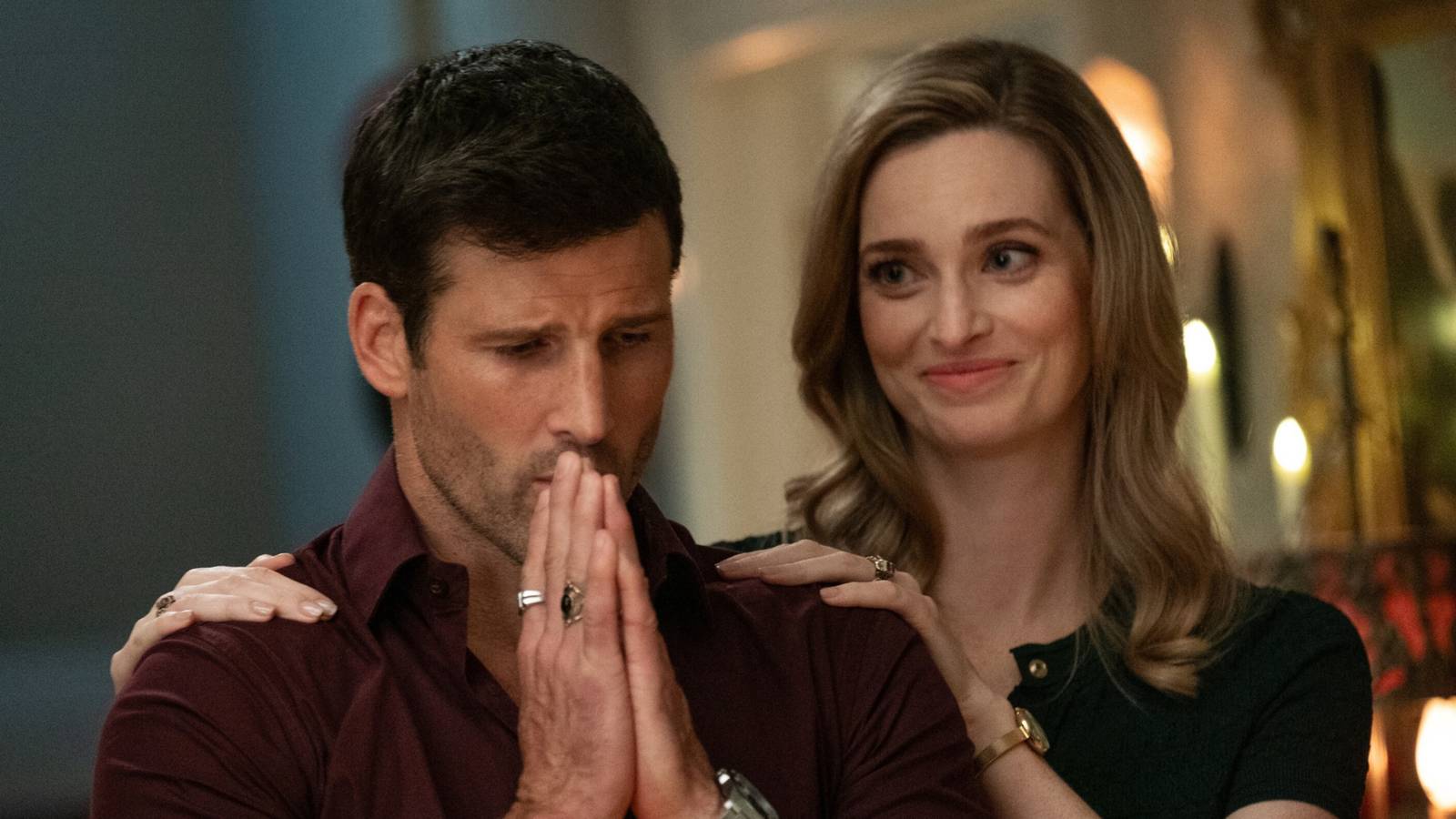
With the war intensifying, a young queer couple, Olya (Tania Myronyshena) and Oleh (Markus Bright), try to flee west from their home in Kyiv. Oleh, however, is turned back at the border. Having recently transitioned gender, jumping through every bureaucratic hoop imaginable to be legally recognized as male, he now faces conscription like any other man of fighting age. Olya, a lesbian still struggling with her partner’s transition, now sees a way out of the war in the prospect of Oleh’s detransition, an escape strategy that could also tear apart the very fabric of their relationship.
Such a clash between the personal and the political could easily yield a schematic story of neat binary oppositions. Instead, Stever again proves herself a master of delicately spun narratives that revel in layer upon layer of complication. The film’s qualities also speak to her fruitful working relationship with her life partner, the Ukrainian film critic turned screenwriter Anna Melikova, who based the script on the experiences of longtime friends. The duo first collaborated on a dread-inducing incest drama, Grand Jeté (2022), but this new film is more delicate, a cinematic gem that feels ethereal even as it is steeped in a painful and urgent reality.
Stever favors sculpting a hermetically tight mise-en-scène around a fearless cast, but compared to her earlier films, she lets far more of the real world bleed into I Rarely Wake Up Dreaming. Both leads are first-time actors, found on Instagram and through Sunny Bunny, a LGBTQ+ film festival in Kyiv. They shaped their characters over months of rehearsal and improvisation. A largely Ukrainian crew, including the gifted cinematographer Volodymyr Usyk (La Palisiada, 2023), filmed mostly in and around Kyiv under wartime conditions. Amid curfews, air raids, the draft, and GPS jamming, the film’s dedication to confronting the present, both in front of and behind the camera, makes it one of the most striking fiction films to come out of Ukraine in recent years.
I Rarely Wake Up Dreaming now heads to the Main Slate of the 64th New York Film Festival for its North American premiere. In August, I spoke with Stever and Melikova ahead of their Locarno premiere, the first interview they gave about the film.

HUGO EMMERZAEL: A legendary interview Anna did for the film publication Seance led to the two of you becoming life partners and creative collaborators, first on Grand Jeté, and now on this film. Anna, can you take us back to that fateful encounter?
ANNA MELIKOVA: I could write a novel about that! I never went to film school, so I learned to write scripts by working as a film critic and curator. Isabelle and I met for an interview in 2015, during a retrospective of her work. I was a big fan of the Berlin School, and I saw a connection to it in Isabelle’s films, while also seeing totally different things in her work. Her films are unpredictable, a quality I also recognized in her at Q&As. She came across as a very nice person, but one who can say very rebellious things, and with such a smile on her face that you don’t immediately realize how ironic and funny she’s being. All of that gave me a rush of intellectual inspiration.
HE: Directing Anna’s script, which is set largely in her home country, must have been a daunting prospect for you, Isabelle.
ISABELLE STEVER: Some of my friends even urged me not to make it! But besides Anna offering me the script, I had reasons of my own to take it on. To begin with, I felt spiritually bound to Kyiv. When I was there, I felt that a 19-year-old version of me would want to move there permanently. So when Russia’s full-scale invasion started, I was already emotionally tied to the place. Beyond that, the tension in Anna’s script between individual freedom and societal conventions mirrors my own questions about gender roles. Before Anna and I became partners, I had only been romantically involved with men. Being with a woman didn’t feel like a big step for me, as gender is just one tiny aspect of a human being. Society, however, started to perceive me differently, and this story let me explore that kind of projection.
HE: Identity comes under enormous pressure in I Rarely Wake Up Dreaming, especially as Oleh’s sense of self collides with expectations imposed by his surroundings. It’s rare to see these themes handled with such tenderness and nuance, let alone in Ukrainian fiction cinema. How did you shape the film around this story?
AM: The script is based on the stories of longtime friends of mine. I wanted to write about how a gender transition affects a relationship, and the invasion pushed that topic beyond the private and into the political. It’s not even that I decided to [bring together] the major topics of gender and war. Reality combined them. In the immediate aftermath of the invasion, though, writing was impossible. Writing is my way of coping with reality, but first I had to pass through profound helplessness and anger. I started drafting the screenplay around May 2022 and worked on it at the Berlinale Talents Script Station and at Sarajevo Talents. Along the way, I collected many more stories from close friends to enrich the plot. Isabelle, meanwhile, was involved from the very start, and some of the film’s dramaturgical ideas came from her.
IS: The tenderness you mention comes mostly from the cast. I’m used to working with professionally trained actors, which means I can create tenderness through the way I direct the mise-en-scène. This film needed a different approach, partly because I made it in a country where I had hardly spent time before, and I knew I couldn’t really direct Ukrainian people like I normally would. I had to find ways to let reality bleed into the story, because if you make a film, you need real things.

HE: The film draws much of its power from the dynamic between Oleh and Olya, played with great intimacy by two nonprofessionals, Markus Bright and Tania Myronyshena. How did you find them and how did you work with them?
IS: We knew Oleh had to be played by a trans man, and with barely any trained trans actors in Ukraine, it was clear we couldn’t limit our search to professionals. By sheer luck, Anna found Markus while she was on the jury of Sunny Bunny, the LGBTQ+ film festival in Kyiv. Within about five minutes of asking around, we were looking at a photo of him and saying, “I think we’ve found our protagonist.” I had always envisioned Oleh and Olya looking alike, which makes the film more emotionally piercing: the resemblance creates a tension between them.
AM: Then I saw a photo on Instagram of a girl in an audience who looked a bit like Markus. I asked around again, and the next day, someone sent me her handle. It was Tania.
IS: We quickly set up an e-casting session and gave her some situations to improvise. Her performance gave us goosebumps, and we felt the same magic once we put the two of them together. The way they moved through the space and talked to each other had an intellectual curiosity that got Anna, our cinematographer, Volodymyr Usyk, and me really excited. There was something there that you could never create through direction alone.
I’m impressed by how attuned part of this generation is to respecting each other’s safe space, and I wanted to contrast that with the disruptive violence of Russia’s full-scale invasion. So my main challenge was to let this fragile tenderness survive. We rehearsed and improvised for somewhere between six months and a year, until Markus and Tania could really play this couple and trust each other through the entire filming process.
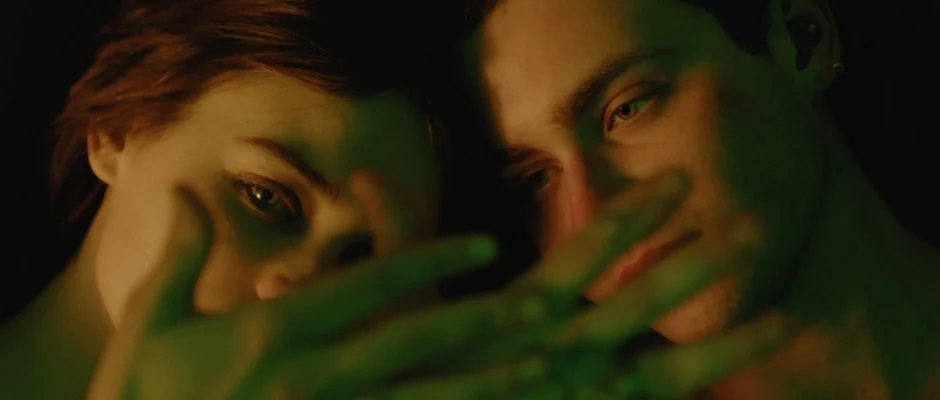
HE: The film plays with distance and proximity. In the opening scene, the couple explores each other’s bodies at night while the camera hangs back, almost around the corner, and yet it feels incredibly close. Later, the filmmaking turns more claustrophobic. How do you find the right distance from your performers, moment by moment?
IS: The idea was to work mostly with wide shots and close-ups, so that you are drawn into the story through the senses rather than through psychology. In the scene you mention, we left the actors their own space and intimacy. They enter and leave the [shot] of their own free will, so they can literally come and go. That was a general strategy in how we worked with the cast. At the start of the film, before the full-scale invasion, they have more space. They are part of society and their surroundings. The city is alive: you see the traffic lights, hear the cars passing by, feel the air coming through the open windows. Later on, the film becomes more and more hermetic.
HE: The failed border crossing gave me goosebumps. Its climax pushes every theme to the extreme: perceptions of gender colliding with a political and cultural sense of duty to the country. How did you build a scene that carries so much weight?
AM: This really happened to one of my friends, including the fact that the male soldiers wanted to let him through, while the women did not. I spoke with my friends about it many times, also separately, because memories can differ, and those conversations shaped how I wrote the scene. Off camera, by the way, getting Markus to Germany for filming proved just as difficult. We had to collect support letters from the European Film Academy and German Films, among others. And since our actors had the freedom to improvise during rehearsals, they brought something of their own personalities to this moment.
IS: Anna’s screenplays are so full of detail that they read like literature, and you could already feel a calmness in the way she wrote this scene. That’s the feeling I went for, while enriching the film with fragments of reality. One observation of my own: on the train home from Ukraine, the cars were packed with young women of childbearing age and their kids. It was as if this country’s chance of surviving as a collective was being parked outside, in a safe room. That moved me deeply, and it became the point of departure for how we cast the scene. Among the 110 extras, we cast many women from that age group. I wanted to show them as people who respect each other and wait patiently to cross the border. I didn’t want the scene to feel panicky.
We also had many animals on set. When you hear how people left the country, there are so many stories about the animals they took with them. So the idea came up to [include close-up] portraits of these animals, as if you stop time in the film to make space for grief.
AM: An idea, I should add, that came up just ten minutes before filming that day, when we couldn’t linger because of the curfew.
IS: And just as we started filming the animals, there was a ballistic-missile threat!

HE: That brings us to the conditions you made this film in. Fiction filmmaking in Ukraine is literally under threat: electricity is scarce, and a missile or drone attack can come at any moment. How did you navigate production under those constraints?
IS: You need very courageous producers. We found them in Uwe Schott and Tom Tykwer, who were deeply invested in the film and raised the funding quickly.
AM: The budget is entirely German. It was important to us not to take any money from Ukraine, but to bring money and jobs there. Many Ukrainian documentaries have been made since the invasion, but far fewer fiction films, so the crew was glad to be on a fiction set again.
IS: The list of obstacles is long. First of all, there’s the matter of security. Our coproducer Natalia Libet and line producer, Alexandra Bratyshchenko, had to make sure they could evacuate everyone during an air raid. If a set isn’t near a shelter, as with the border scene, you need to think about how to evacuate 110 people. We always stressed that during an air-raid alarm, everyone was free to keep filming or head to a shelter. Nobody ever went, but it was important that they knew they could. We also felt the emotional toll on a team that has lived through these wartime conditions for years. We, too, quickly started weighing whether to go to the shelter or stay in bed at night, to save energy for the next day of filming.
The curfew, meanwhile, dictated our schedule, as everyone had to be off the street before midnight. And throughout the production, men were being drafted: crew members, actors, or extras you wanted to cast were suddenly no longer available. These men also can’t leave the country, which complicated our few filming days in Germany. On top of that, GPS was often jammed to send drones back to Russia, which made it hard for the crew to find locations.
AM: Sometimes the clock on your phone suddenly switches to Moscow time. It’s insane.
HE: Filmmaking is emotionally trying as it is, and you carry a double responsibility here: as life partners, and as a foreigner to and a native of the place you’re filming. Yet the film feels like both a natural extension of Isabelle’s work and a deeply personal story for Anna. How does that cocreation work?
AM: Compared to our previous film, Grand Jeté (2022), this collaboration was much more intimate, partly because of the Ukrainian language and culture, and partly because the themes stem from our own backgrounds. In general, I could never hand over a script to a director and forget about it. During production, I was Isabelle’s interpreter and helped with logistics. I worked closely alongside her, also making creative decisions, although Isabelle had the final word. Of course, sometimes we had different opinions. And it wasn’t easy, to say the least, being holed up in a Kyiv hotel room for three months.
IS: It’s a miracle our marriage survived! We’re different, but curious about each other’s worlds, and that keeps enriching both of them. Whenever I have an experience, I feel I have to immediately tell Anna, because I love knowing how she sees things.
HE: Anna, you served on the jury of Sunny Bunny, Kyiv’s LGBTQ+ film festival. How does a film like this reflect on contemporary Ukrainian society?
AM: While Sunny Bunny receives occasional hostile responses from right-wing radicals, Ukraine’s increasingly more progressive state rhetoric toward queer people is the opposite of Russia’s state-mandated homophobia.
IS: For a lot of the crew and cast, it was their first encounter with a trans man. It widened their range of experience and enriched their worldview.
AM: We also tried to bring queer people onto the team to support them, though of course, it was a mix. It was very moving when the older cast members told us [this film] had opened a new horizon for them: encounters with queer people, and maybe with us too, hadn’t really been part of their lives before.
HE: Is breaking binaries and crossing borders part of why you make cinema?
IS: Cinema is a space of freedom. Exploring the variations of human diversity, the space between poles, enriches what it means to be human. You feel the bars of your own cage: the cage of your gender, and the bars of other cages, too. For me, the film gives space to reflect, to find another perspective, and to give LGBTQ+ people visibility.
Publisher: Source link