

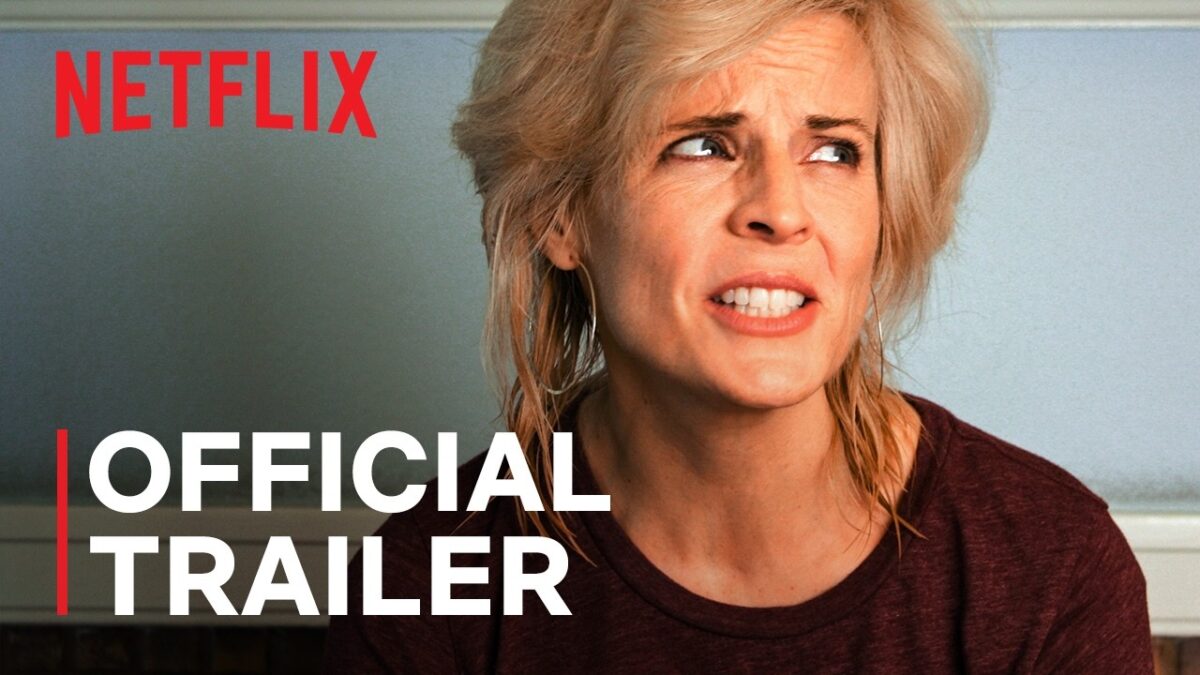
One of the first jokes (or is it?) in “Paralyzed By Hope: The Maria Bamford Story” is that comedian Maria Bamford doesn’t particularly want to be in a documentary about herself. Co-director Judd Apatow has to convince her to participate, even paying her for the privilege. It’s funny, awkward, and seemingly only half a bit, which makes it a fitting introduction to a comedian whose entire career has blurred the line between deeply personal confession and absurdist comedy. Directed by Apatow and Neil Berkeley (“Harmontown,” “Group Therapy”), the doc, ‘Paralyzed By Hope,’ is a frequently hilarious, remarkably empathetic, and enlightening portrait of a singular comic talent whose mental health struggles are deeply intertwined with her distinctive comedic sensibility.
READ MORE: 88 Must-See Movies This Fall: ‘Dune: Part Three,’ ‘Digger,’ ‘Avengers: Doomsday,’ ‘The Adventures Of Cliff Booth’ & More
For those unfamiliar with Bamford, the film is an excellent introduction to one of stand-up comedy’s most unusual voices. Growing up in Duluth, Minnesota, she eventually developed an eccentric, wildly unpredictable style built around strange vocal inflections, elaborate characterizations, painfully intimate revelations, and a willingness to expose things most people would never dream of discussing publicly. That sensibility also fueled Netflix’s surreal, autobiographical series “Lady Dynamite.” Ted Sarandos admits in the documentary that the show’s viewership probably didn’t justify a second season, but he loved it so much he renewed it anyway, calling it his favorite Netflix original. It’s a telling endorsement of an artist whose brilliance has never depended on mainstream popularity. There’s something almost disarmingly childlike about her delivery, but her routines can be incredibly dark, exploring everything from obsessive-compulsive disorder and depression to anxiety, suicidal ideation, and complicated family relationships.
Conan O’Brien offers one of the film’s sharpest descriptions of her nervous, twitchy vulnerability. “Sometimes it feels like you’re talking to a lobster whose shell has been removed and it’s feeling every single molecule in the room,” he observes. It’s an absurd image, but also an uncannily perceptive description of someone who appears to experience the world with almost painfully heightened sensitivity.
Onstage, Bamford jokes, “I am not a good time, I am an assignment from a therapist.” The line is hilarious partly because it’s also half true. Indeed, that’s the genius and often heartbreaking quality of her work. Her jokes are so laceratingly honest, so willing to confront the ugliest and most uncomfortable parts of her own experiences—that lobster-boiled-alive feeling, only with emotions— that the distinction between punchline and personal confession practically disappears. Bamford doesn’t simply use humor to conceal her suffering; she puts it right out there, exposing all the insecurities, intrusive thoughts, and psychological difficulties that most people desperately try to hide.
Much of that material comes from her upbringing and particularly her relationship with her mother, who could be loving but also extraordinarily cutting. “When you don’t wear make-up you look mentally ill,” her mother once told her, a cutting remark that speaks volumes about the family’s occasionally damaging approach to Bamford’s problems. Her father was affectionate but struggled to communicate, while her relationship with her sister was similarly complicated, marked by genuine love, frequent friction, and the uncomfortable reality that virtually everything anyone says to Maria might eventually become emotionally volatile ammunition for her act.
Bamford’s impersonations of her family are often among her best routines, but they’re also remarkably candid, sometimes at the expense of the people closest to her. In one particularly dark anecdote, she recounts her mother’s inability to locate her inside the house and her immediate fear that the worst had happened. “And I just thought, we’re going to have to drag the lake,” she recalls her mother saying. It’s a horrifying thought, delivered with the kind of matter-of-fact absurdity that Bamford somehow transforms into comedy gold. These stories are wickedly entertaining and deeply unsettling, and the documentary definitely recognizes that her family’s dysfunction has been both a source of considerable pain and an almost inexhaustible supply of material.
Naturally, Apatow and Berkeley assemble an impressive collection of fellow comedians to contextualize her talents, including Stephen Colbert, Sarah Silverman, Zach Galifianakis, Patton Oswalt, Tig Notaro, and O’Brien. What emerges isn’t simply a chorus of praise but a shared fascination with Bamford’s willingness to make herself so raw and vulnerable, exposing her most private fears without sacrificing a punchline. But the film wisely leaves plenty of room for her performances, letting audiences experience firsthand what makes her so special rather than simply taking their word for it.
Apatow’s avuncular warmth toward comedians has long been a defining quality of his documentary work, including his terrific recent “Norm: The Tale Of Norm Macdonald.” He clearly loves these people and their craft, but he’s also spent a lifetime trying to understand what makes comics tick, why they see the world differently, and what makes them so damn funny. That curiosity informs his and Berkeley’s approach to Bamford. Rather than simply cataloging her mental health issues or celebrating her ability to overcome adversity, they’re trying to understand how someone with such acute sensitivity can transform personal anguish into something so fearlessly candid, inventive, and disarmingly entertaining.
The documentary becomes increasingly affecting as it moves into the present, following Bamford over several years during an especially trying period of her life. Beyond the challenges she’s already faced, she must contend with the deaths of both parents, the isolation of the COVID-19 pandemic, and the terrifying threat of losing her home during the Los Angeles wildfires. It’s a staggering accumulation of hardship, and what makes the footage so moving is that Bamford doesn’t suddenly become some inspirational figure who’s conquered all her demons. Her fragile anxieties and vulnerabilities remain, even as she continues finding ways to navigate them.
Just as noteworthy is the generosity underneath all that self-deprecating humor. Despite her own considerable challenges, Bamford devotes time to smaller comedy venues and fellow performers, finding ways to support others and share her work outside the traditional machinery of show business. That kindness extends to her audience, too. By being so radically candid about her experiences, she helps people facing similar difficulties feel less isolated, turning deeply private torment into something communal and unexpectedly comforting.
At nearly two hours, “Paralyzed By Hope: The Maria Bamford Story” covers considerable ground, but Apatow and Berkeley understand that the film’s greatest asset is Bamford herself. The stand-up footage is consistently terrific, the family dynamics are fascinating, and the contemporary scenes give the account an immediacy that a more conventional career retrospective might lack.
Support independent movie journalism. Sign up for The Playlist Newsletter for the latest film and TV news, reviews, interviews, and more—free.
Compassionate, insightful, and often unexpectedly touching, “Paralyzed By Hope” ultimately shows an artist who has found a way to make something worthwhile out of experiences that can be painful, humiliating, and frightening. Bamford’s particular gift lies in her ability to find the ridiculous in those moments without ever pretending they’re anything other than what they are. Apatow and Berkeley understand that distinction, and their affectionate film is all the richer for it. Bamford may not always be having a good time, but she’s exceptionally gifted at making everyone else laugh, even when the truth behind the joke can devastate. [B+]
“Paralyzed By Hope: The Maria Bamford Story” is now streaming on Netflix.

Rodrigo Perez
Publisher: Source link


