
Show — don’t tell. That’s one of the very first lessons you’ll learn in any creative writing class. Another is that conflict is essential to any story, as it drives the plot forward, helps the characters grow and change, and keeps the audience engaged. Ira Sachs’ Peter Hujar’s Day decides to break both of those rules, resulting in something that feels more like an experimental art piece than a traditional film. It definitely won’t be for everyone — or maybe even most people — but its target audience, however small and niche, will likely find it to be a lovely little gem.
What Is ‘Peter Hujar’s Day’ About?
Image by Jovelle Tamayo via Sundance Institute
The film takes place on December 18th, 1974, in Manhattan, with the script pulled verbatim from an interview writer Linda Rosenkrantz (Rebecca Hall) carried out with her dear friend, the titular Peter Hujar (Ben Whishaw). A photographer who tragically died from AIDs at the age of 53, Rosenkrantz originally intended Hujar to be the first in a series of interviews she’d do with her artist friends about the mundane (to them, at least) previous day in their lives. The book, unfortunately, was never released, and the audio recording of the interview was lost for decades. In 2019, however, a transcript was recovered and subsequently lightly edited and published in a book of its own, which Sachs essentially uses as his script.
The film is lean in just about every way: it runs just 76 minutes, includes two characters, and takes place entirely in Hujar’s (admittedly spacious and stunning) apartment. The entire plot — if you can even call it that — is simply Hujar recounting the last 24 hours in vivid detail, from several naps and unwelcome phone calls to a photoshoot with poet Allen Ginsberg to picking up Chinese food. Rosenkrantz occasionally speaks to ask a question or interject, and the two move around the apartment as the day passes. But, for the most part, it’s one long monologue without any real action.
‘Peter Hujar’s Day’ Is Unpretentious and Gorgeous But Somewhat Inaccessible
Image Via Sundance Film Festival
Peter Hujar’s Day throws the audience into the conversation without any real pretense, and those who aren’t familiar with the New York art scene in the ‘70s and ‘80s will likely struggle to derive much meaning from the name drops and may find themselves getting lost or zoning out during the denser scenes. The film doesn’t highlight Hujar’s photography, so unless you come in with knowledge of his photographs, you won’t have context for his style or impact. In this way, aspects will be somewhat inaccessible for the typical audience member. But while these details would almost certainly enhance the viewing experience, they aren’t necessary to enjoy it in some capacity.
Films about artists can often be stuffy and self-important, filled with obnoxious platitudes about the importance of art and cliché lamentations about the struggle of being creative. In Peter Hujar’s Day’s focus on the day-to-day, these are refreshingly avoided, humanizing the pre-eminent forces of the New York art scene. Rather than proclamations about his process, Hujar spends most of his time bantering with Rosenkrantz and sharing petty gossip about mutual acquaintances. It can get delightfully shady, even if the vast majority of the audience doesn’t exactly know who they’re talking about.
Related
‘Folktales’ Review: A Feel-Good Film Full of Good Boys | Sundance 2025
The documentary centers around a group of teens finding themselves through survival skills and dogsledding.
The directing is, for the most part, excellent, seamlessly floating us from room to room in a fluid, almost dreamlike way and highlighting Stephen Phelps’ stunning production design. Alex Ashe’s cinematography, too, is notable — particularly his use of light that noticeably changes throughout the day and contributes to the environment and mood. However, a few extended transitional scenes characterized by a rather intense score and prolonged shots of Hujar and Rosenkrantz don’t have a clear purpose and are jarring enough to briefly take the audience out of the rhythm it’s lulled us into.
‘Peter Hujar’s Day’ Features Two Incredible, Very Different Performances
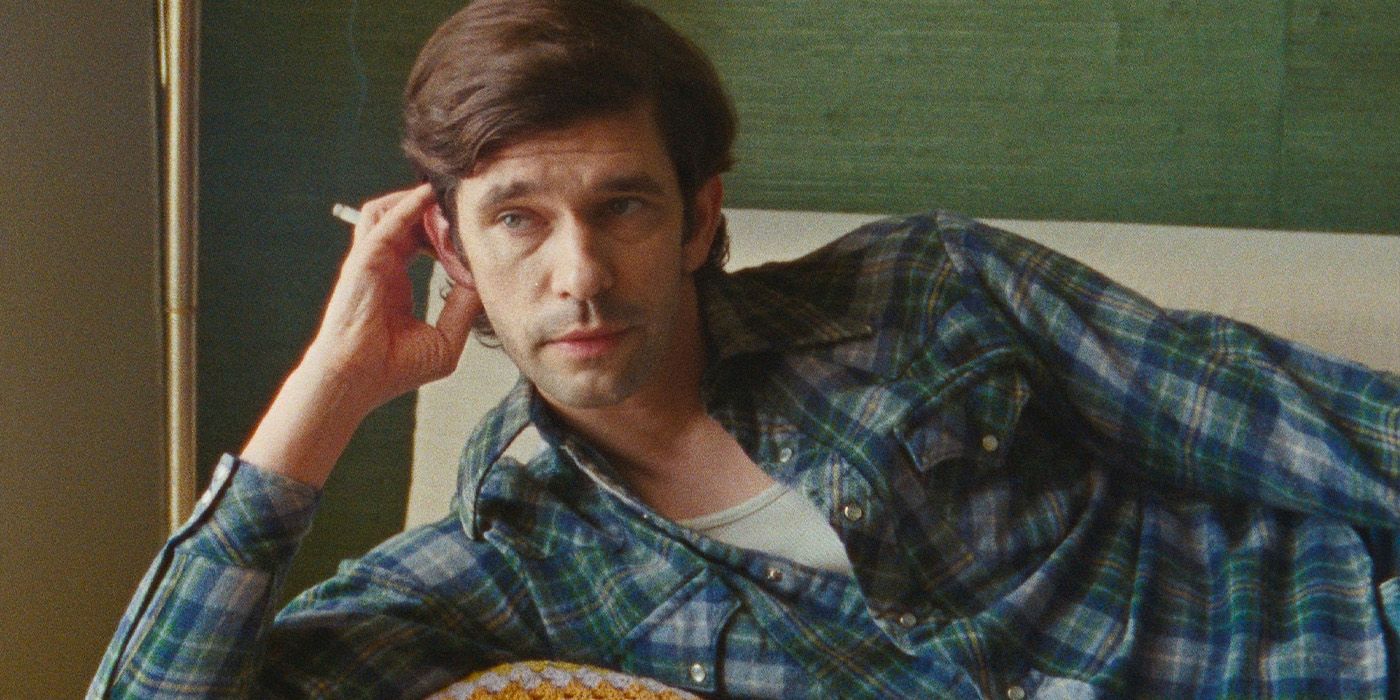
This is undoubtedly Whishaw’s film, with its success entirely hinging on his performance. And boy, does he give a wonderful one. Whishaw spoke about how learning his lines for this film felt like learning someone else’s improv, and that shines through. He completely captures Hujar’s specific speech patterns and inflections. It sounds exactly like how a person would naturally talk — because it is exactly how Hujar talked during this interview, down to the mistakes and repetitive words and punctuation. Whishaw honors Hujar’s voice and brings it to life in a way that feels effortless and consistently engaging. And that’s not even to mention the pitch-perfect accent he dons or the specific way in which he moves and carries himself. It’s a transformative role for Whishaw in the truest sense of the word.
It helps that Hujar is inherently funny, lying about innocuous things for fun and making digs at people with a hilariously dry and deadpan delivery. He’s engaging even when talking about something as prosaic as making a sandwich. When he does talk about his process, there’s a disarming relatability and self-awareness to it. After speaking about how he needs time to really look at his photographs to be able to judge and get to know him, he brushes himself off. “That sounds corny,” he notes.
Hall’s performance may seem less demanding, with only about three pages of dialogue compared to Whishaw’s over fifty, but it may be just as difficult in a different way. Unable to rely on dialogue, her performance is all in her expressions. Hall is the ultimate scene partner, subtly driving the story whenever she does speak and giving Whishaw something to play off of. One of the first things you learn in acting school is that acting is reacting, and nearly her entire performance is an exercise in this. Her chemistry with Whishaw is obvious, a warm intimacy and familiarity radiating off the screen.
At one point, Rosenkrantz admits that she had the idea to conduct these interviews because she herself feels like she does very little at all with her days. That, of course, is all a matter of perspective. Peter Hujar’s Day’s thesis seems to be that it’s these normal days that add up to a life and there’s beauty and importance to be found in living, documenting, and reflecting on them for those willing to be patient. There’s a similar sentiment to be said of the film — it’s a rewarding one for those willing to sit with something slow and experimental.
Peter Hujar’s Day
‘Peter Hujar’s Day’ is an experimental film about the life of an artist that hinges on the performances of its two leads.
Production & Release Details
Publisher: Source link